
Have you ever visited an extremely landlocked city — say, Omaha — thought about where to go out for dinner, and decided, “Hey, I’m in Nebraska. Why not try the sushi?” I doubt it. Raw fish can be a dangerous source of foodborne illness in the best of circumstances. And your risk increases when fish are shipped hundreds or thousands of miles away.
On the extreme end of the spectrum, there’s also sushi made with a kind of blowfish (called fugu in Japan) that’s so potentially lethal (in the hands of a poorly trained or momentarily inattentive chef) that it kills about 100 people per year.
Plus, eating fish has its own environmental issues (if current trends continue, by 2050, there will be more plastic than fish in the world’s oceans) and is often high in mercury and other contaminants.
Yet sushi is so popular and just tons of fun. It’s finger food; it travels well to picnics or potlucks; it can be beautiful; and it involves dipping. Can we get all the benefits of sushi without the fish? Can we even enjoy it safely in Omaha? And, to answer the question posed by the headline, can vegans eat sushi?
In this article, we’ll explore the world of sushi and how to go fish-free with vegan sushi. We’ll look at different forms of sushi, see how to make it exclusively with veggies, and check out some delicious plant-based sushi recipes.
Types of Sushi
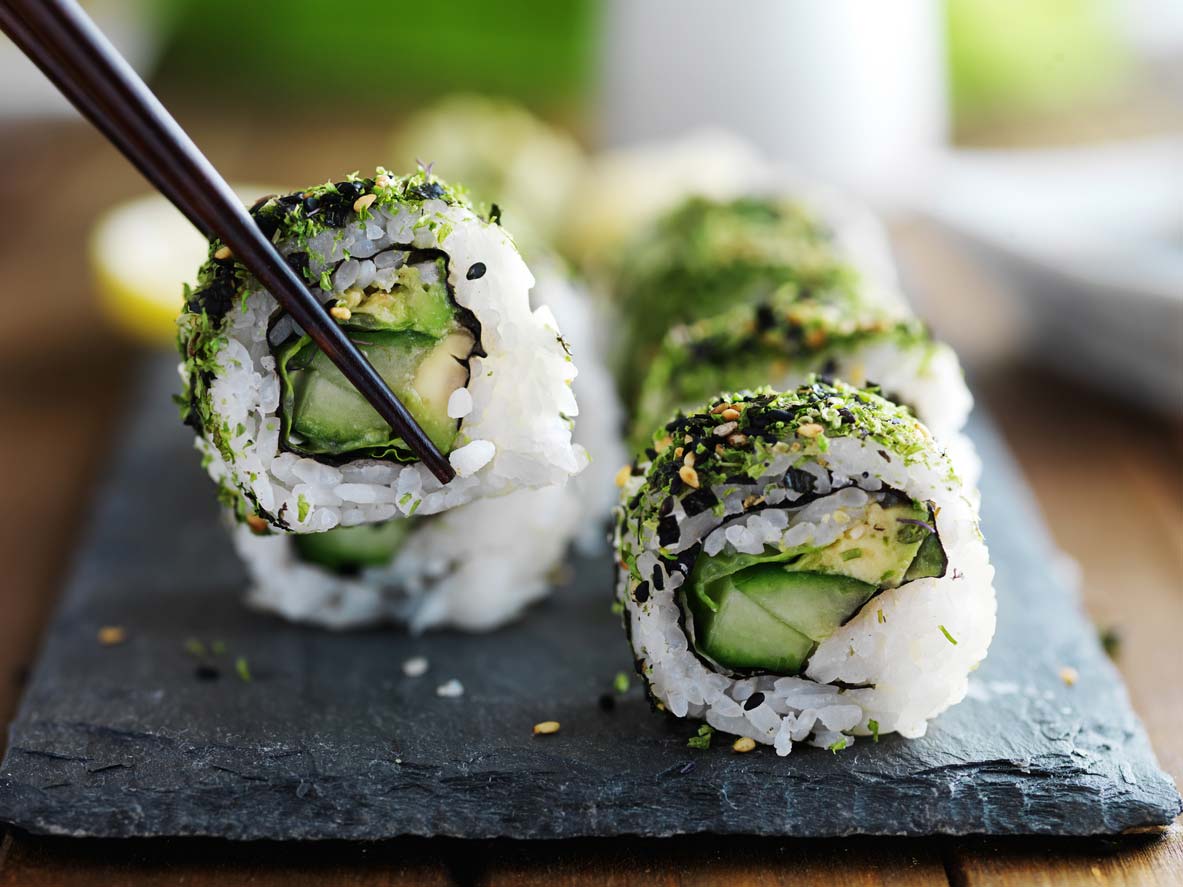
Sushi comes from the word sushimeshi, meaning “sour rice,” a nod to the vinegar-seasoned rice used in sushi-making. Sushi is a traditional Japanese dish featuring rolled seaweed sheets, specially prepared rice, and usually some type of seafood, nuts, and/or vegetables. Sushi ingredients are typically raw, cooked, or pickled. And there are different types of sushi, differentiated by their structure and composition. The types of sushi include:
Makizushi
Makizushi is the best-known type of sushi, consisting of a single sheet of seaweed rolled around rice and fillings, then cut into 6-8 pieces. The word “maki” means “to roll.” Makizushi comes in two basic sizes: larger-circumference rolls with more fillings are known as futomaki, and slimmer rolls with a single filling are called hosomaki. Each piece is meant to be dipped in soy sauce and eaten in a single bite (thus avoiding double dipping).
Another word for makizushi is norimaki; nori is the seaweed sheet that’s lightly toasted, filled with rice and other ingredients, and rolled.
Uramaki
Uramaki is inside-out makizushi. Same form, same ingredients, but with the seaweed hidden inside the roll, and a decoration of sesame seed, fish eggs, or other toppings typically clinging to the outer rice layer. Uramaki is an American invention, from the days when sushi was unfamiliar and the idea of eating seaweed altogether unheard of. The best-known version of uramaki is the California roll, with cucumber, avocado, and crabmeat inside the nori and rice outside.
Nigiri
Nigiri is an oval-shaped mound of rice, topped with a slice of something. Sushi makers mold the rice into a mound and press the topping onto it by hand, which explains the name nigiri, which means “gripped or pressed (by hand).” Traditionally, the sliced ingredient on top is a fatty fish like tuna, salmon, or shrimp.
Temaki
Temaki, also known as a hand roll, consists of a nori sheet wrapped around fillings in a cone shape. These are typically larger and more filling than the other rolls — one or two of these can make a complete meal.
The Evolution of Sushi
What Americans think of as sushi is quite different from traditional Japanese sushi, which itself isn’t that old. Whereas sushi in Japan is often eaten at special occasions, many Americans consume their favorite finger food multiple times per week.
Sushi originated in Southeast Asia as a way of preserving fish. Fishermen (and women) would press their fresh fish between piles of salted rice, pile on a heavy stone, and leave it to ferment. Initially, this process took several months. Once complete, the rice was tossed as waste. And since it was so labor-intensive, only the wealthy could enjoy this delicacy.
Over time, people figured out that adding vinegar to the rice could speed up fermentation from months to weeks or even days. At these speeds, the rice itself stayed tasty and safe enough to consume, and fish and vegetables became popular toppings and fillings because they were readily available.
The evolution of sushi continued in the port city of Edo, Japan (now Tokyo), where fishmongers found that putting the fish next to hot cooked rice could reduce prep time to just a couple of hours. But modern sushi as we know it really came about in the 1820s when entrepreneur Hanaya Yohei opened a sushimeshi stall on the banks of the Sumida River. With access to such fresh fish, Yohei dispensed with cooking and fermenting and simply sliced raw fish over cooked, seasoned rice in the nigiri sushi style. In a sense, sushi became an accessible, fast food thanks to Yohei (albeit healthier than the modern version).
The Problem with Eating Fish
I want to acknowledge that research shows fish can be part of a healthy diet. Studies show that people who eat fish tend to live longer and enjoy healthier lives, with a lower risk of chronic diseases that affect much of the Western world. But fish also have some serious drawbacks.
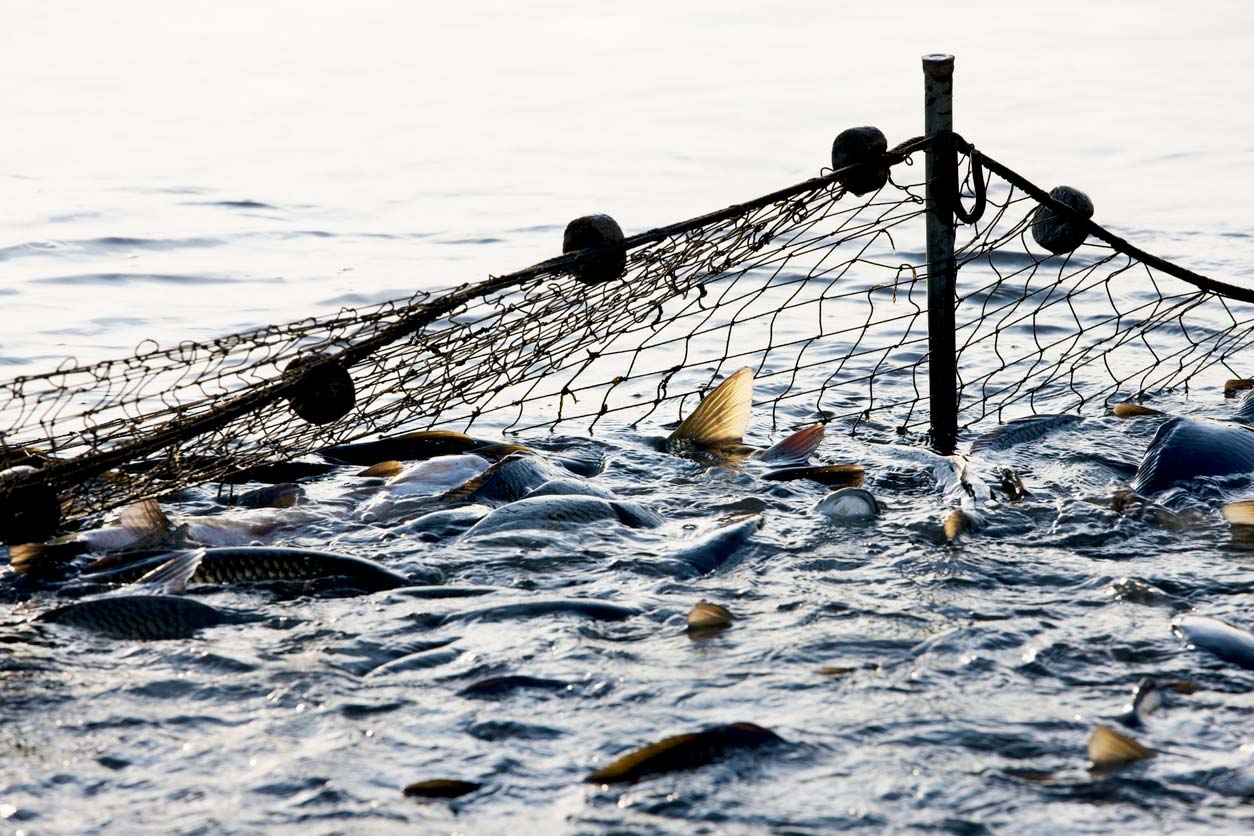
The problem is, we aren’t actually fishing our oceans; we’re overfishing them. That is, we’re pulling fish out at a faster rate than they can reproduce. According to a 2024 report, the fishing industry worldwide is heading toward collapse much faster than previously believed.
And we’re catching a lot more than just the species we eat. Thanks to nets up to two miles long with openings the width of a football field, fishing trawlers catch marine life such as whales, dolphins, sharks, and sea turtles. In fact, up to 40% of all catch is what’s termed “bycatch” — marine animals that will not get sold, and may end up dead or disfigured due to these extremely inefficient and cruel methods of industrial fishing.
Farm-Raised Fish
So maybe we can avoid the problems associated with fishing by raising fish in farms, rather than catching them in the wild? Nope. Farm-raised fish — which now comprise half of the world’s fish harvest — are, if anything, actually worse than wild-caught fish on most counts. They generate massive amounts of pollution, and large amounts of antibiotics are required to keep fish alive under toxic conditions.
Other chemicals, including pesticides and anticorrosives, are liberally used and leach into the environment. Not to mention that the fish raised in captivity aren’t as health-promoting as wild-caught, with less protein and a less favorable omega-6 to omega-3 ratio.
Pollution & Other Contaminants
On the topic of health, wild-caught species are often nearly as polluted as their farm-raised counterparts. We’ve been treating our oceans, rivers, and lakes like garbage dumps, resulting in the fish we love eating becoming riddled with toxins such as mercury, PCBs, and even pharmaceutical drugs.
What’s more, fish used for sushi is typically raw, which also means a heightened risk for bacterial and parasitic infections.
Ethical Concerns of Eating Fish
From an ethical perspective, eating fish also means taking another creature’s life. And studies tell us that fish do feel pain, as evidenced by their ability to produce endogenous opioids (natural painkillers). Many people prefer not to cause pain to other sentient beings if they don’t need to.
(For a whole article on the pros and cons of eating fish, click here.)
Fish Tastes Fishy
And finally, not everyone loves the taste of fish, especially when it’s raw.
The good news is, you can still enjoy sushi if you don’t eat or like the taste of fish (for whatever reason). The trick is to view sushi as primarily a rice, veggie, and seaweed dish, rather than a delivery system for raw fish.
Types of Vegetarian Sushi
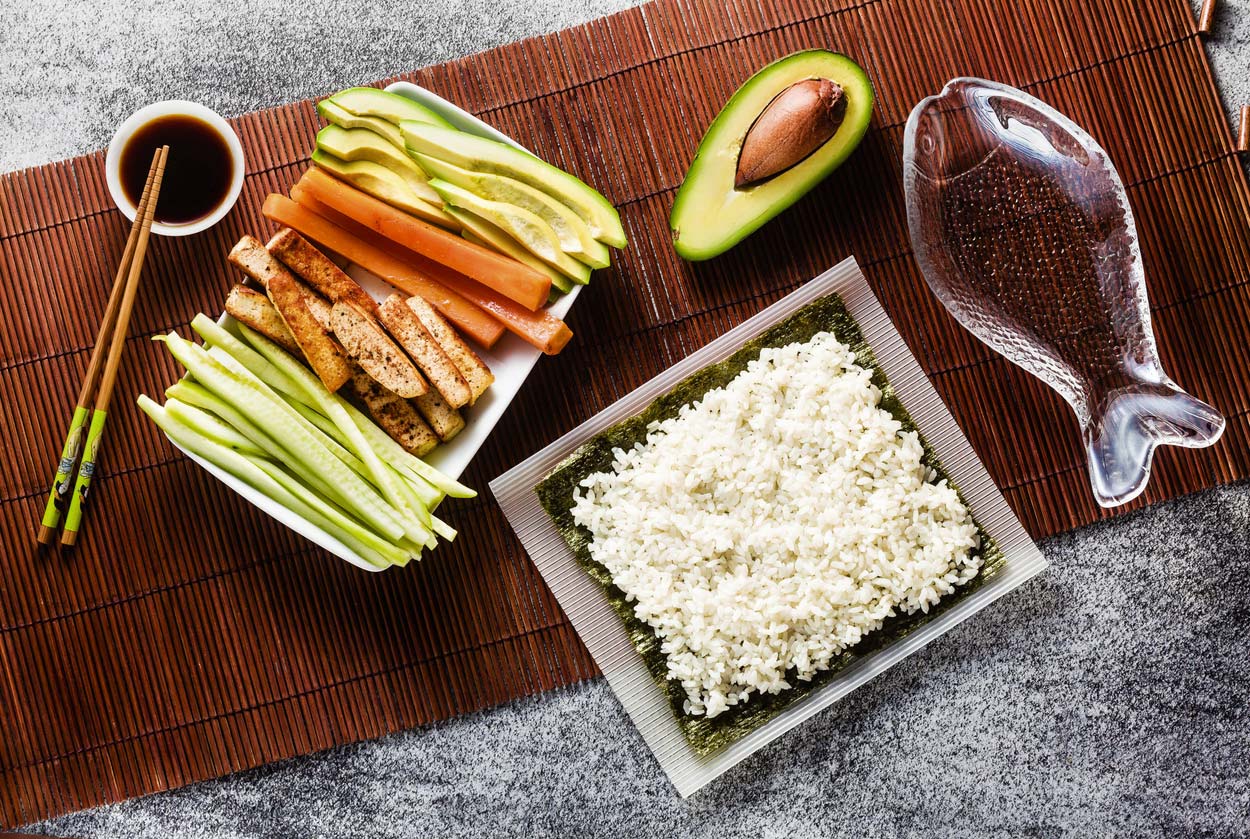
Rice seasoned with salt and vinegar is a pretty good base for a vegan meal. However, to make vegan sushi, the trick is to replace the fish with fish-free fillings and toppings. You can make sushi out of almost any food you can think of. Here are some typical vegan sushi options you can find at restaurants or make at home.
Cooked Vegan Sushi
One favorite cooked vegan sushi filling is mushrooms, which mimic the texture and mouthfeel of certain kinds of sushi fish. In addition to the common white button mushroom, you can also use shiitake, portabella, baby bella, or just about any other kind of edible mushroom.
Cooked veggies that go well in sushi include eggplant, carrot, and sweet potato. You can steam or microwave these vegetables, or cut them into strips, marinate them, and bake or air-fry them to mimic the taste and crunch of bacon.
Baked tofu also adds a chewiness to vegan sushi and can absorb whatever flavor you soak or cook it in. And lately, the inventive vegan blogosphere has been abuzz about techniques for turning beets and even tomatoes into very convincing mock raw fish. Done well, it even looks like raw tuna!
Raw Vegan Sushi

To make raw vegan sushi, you can start with the plant-based ingredients from traditional sushi making. Avocado and cucumber pair well together in sushi. Avocado is a classic substitute for fatty fish, and cucumber adds moisture and crunch. You can cut and slice either veggie in many ways to accommodate the form and visual appeal of whatever kind of sushi you’re making.
Carrots, sliced thin or julienned, also add color, flavor, and texture to your rolls. And raw cashews or macadamia nuts, laid in a tight row over the rice before rolling, can add a fatty crunch to every bite.
You can also sprinkle raw sesame seeds on the rice for visual and flavor appeal. Black sesame seeds, available in specialty shops and online, make a nice black-and-white contrast that shows up especially well when making uramaki sushi (the inside-out variety).
Pickled or Fermented Sushi
You can also pickle or ferment many types of vegetables for vegan sushi. Some of the classics include radish, summer squash, and asparagus, but you can go to town here, and consider pickling carrots, cabbage, beets, or whatever’s in your garden or fridge. A word of caution here: Some Asian grocery stores sell commercially produced pickled squash and radish, which may include preservatives and artificial coloring. Check the label before purchasing, or ferment it yourself.
You can also ramp up the flavor of your sushi with the fermented soybean dish known as natto (one of the best sources of the essential vitamin K2), or use the tangy, slightly sweet, and very salty umeboshi plum paste.
Vegan Sushi Goes Mainstream
What began as a creative reinterpretation of a traditional dish has evolved into a broader culinary movement. Vegan sushi isn’t just a home-cooking trend — dedicated vegan sushi restaurants and inventive plant-based sushi offerings are expanding in cities across North America and beyond. From meticulously crafted vegetable nigiri to plant-based versions of tuna and salmon rolls, this growing popularity reflects rising demand for sushi that delivers on flavor, artistry, and tradition — without relying on fish.
How to Make Vegetarian or Vegan Sushi
If you’ve seen the documentary Jiro Dreams of Sushi, about a master sushi maker who approaches each cut and roll with the attention of a surgeon performing a heart transplant, you might be intimidated about your own ability to make sushi. Certainly, becoming a master sushi chef takes decades of practice. But just as you don’t have to win the Indy 500 to drive to work, you can start enjoying vegetarian or vegan sushi right away at home. Sure, your initial rolls might look a little rough around the edges. But the good news is, they’ll probably taste awesome from Day 1.
Here’s how to get started.
Sushi Tools for the Kitchen
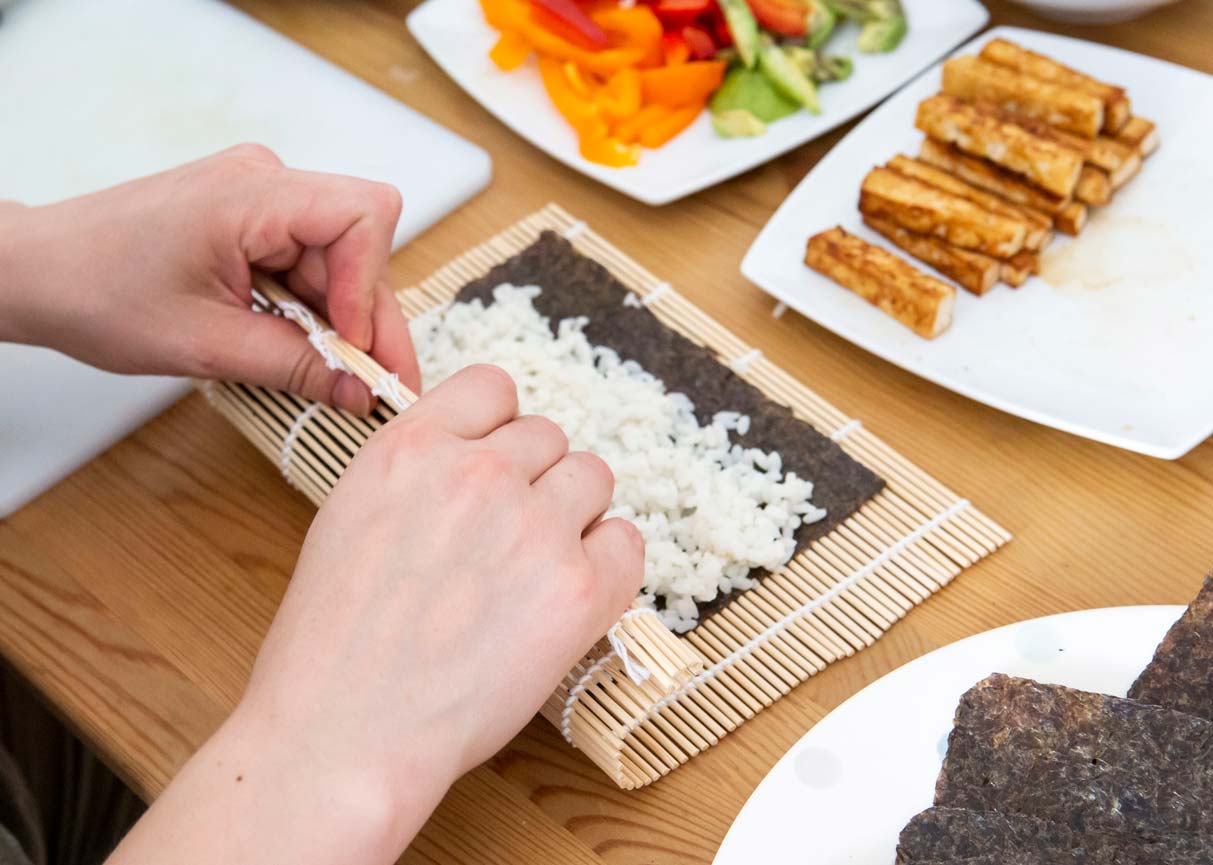
First, you’ll need some basic tools. The only tool most people don’t already have in their kitchen is a sushi mat. You’ll need this to make neat, tight, even-diameter rolls all the way through, and to apply enough pressure to help the rolls maintain their shape once you cut them into pieces. Here’s one that I like for under five bucks.
If you don’t have a sharp knife, your sushi will look like you tried to shape it with a hammer. Dull blades rip the nori and squash the edges of each piece. This 8-inch gyutou knife pairs traditional Japanese design with German engineering and costs about $30. It also includes the very helpful advice, “Do not use your hand to test the hardness of the blade.”
Along with a knife, you’ll need a cutting board unless you enjoy scratching your countertop and ruining your knife on a regular basis. While you can always find a cheap plastic cutting board, I recommend using a natural material such as wood or bamboo. Here’s a beautiful, organic bamboo cutting board that should last you a long time.
Sushi-Making Supplies

One thing you definitely need to make sushi is a seaweed wrap. You can get sheets of nori, usually in packs of 10 or 50, in Asian grocery stores and upscale supermarkets. You can also order nori online, where you’ll have a better selection. I recommend buying organic nori if at all possible. You can find lots of organic options here.
Next, you need your grain filling. Rice is traditional, but we’re adventurous food iconoclasts here, so you might want to try quinoa or millet or even riced cauliflower if you’re concerned about arsenic in rice. If you do go with rice, get sushi rice or short-grain rice, as it will be stickier than basmati or other longer-grain rice. And you definitely need your rice to be sticky so your rolls don’t fall apart.
Since the word sushi refers to the sour taste of the rice, you’ll need rice vinegar to flavor your grain. Some rice vinegars are pre-sweetened with refined sugar (they’re often called “sushi rice vinegar” or “seasoned vinegar”). But if you want to avoid white sugar, get plain rice vinegar and then (if you so desire) add your own sweetener, such as maple syrup or date paste. These are good for making your rice stickier. To add umami flavor to the grain, you can use tamari soy sauce (or a soy-free alternative such as coconut aminos) or umeboshi vinegar or umeboshi paste.
Finally, choose your optional dipping sauce. This is usually a salty liquid, such as tamari, soy sauce, coconut aminos, and the like. If you enjoy the taste and sensation of horseradish or Chinese mustard, you can mix green wasabi paste with the tamari for that special feeling of having your sinuses cleared by a power washer. Again, beware of commercial wasabi paste; that bright green hue is almost certainly due to artificial colors. Look for natural wasabi paste, or buy dry wasabi powder and make your own.
New Plant-Based Sushi Options
Today’s plant-based food industry includes products made to mimic raw fish — like vegan tuna and salmon blocks or poke cubes — making fish-free sushi even more convincing and convenient for home cooks and chefs alike.
How to Make Vegan Sushi
Now that you have your sushi-making tools and supplies, it’s time to roll up your sleeves — and your sushi. If you haven’t done this before, I recommend starting by watching some videos. It’s much easier to watch someone make sushi than explain all the steps in print. (Writing them out makes it seem much harder and more complicated than it really is.) But if you prefer to read instructions, check out this WikiHow on how to roll sushi.
For visual instructions on rolling sushi, here’s a short (3-minute) video by a professional sushi chef that shows you everything you need to know about how to make sushi.
Let me tell you from experience that your first rolls will probably not be anything to write home about, unless your letters home include statements like “My sushi looked like a bunch of gladiators had a food fight.” Be patient, and enjoy the process. Even a roll that falls apart when you look at it isn’t a complete waste — just dump it into a bowl, add some condiments, and pretend that was your plan all along. You’ll be making fine-looking, delicious, and healthy vegan sushi before you know it. To get you started, here are some recipes for inspiration.
Fish-Free Vegan Sushi Recipes
How many versions of vegan sushi are there? The options might just be endless! While we had to limit ourselves to just five for this article, we encourage you to experiment in your own kitchen with a variety of veggies and grains after trying our offerings below.
Our Veggie Nori Rolls are the classic vegan sushi you may already know and love. Then kick your culinary experience up a notch by making the Vegetable Hand Rolls using a nori sheet (which is sort of like replacing whole-grain tortillas used in traditional wraps). Have fun experimenting with grains other than rice by using quinoa to make the Avocado and Mango Quinoa Nigiri or millet to make Rainbow Millet Rolls with Miso Peanut Sauce.
Finally, deconstruct your sushi (which might happen naturally during early sushi-making sessions!) to make a Vegan Sushi Bowl with Wasabi Mayo. No matter how you roll it, err, create it, have fun making these vegan sushi options!
1. Veggie Nori Rolls

We provided a list of suggested vegetables to include in the nori rolls, but anything goes! Use whatever veggies you have on hand, just make sure they’re julienned or cut small enough to fit into these plant-based sushi rolls without busting the seams!
2. Vegetable Hand Rolls

You can enjoy temaki sushi like any other wrap. Add whole grains such as brown rice or quinoa, a plant-based protein like tofu or tempeh, colorful vegetables — think carrots, sprouts, and peppers — and your favorite sauce to a nori sheet, then wrap it into a unique little cone shape. This vegan sushi is a great way to switch things up with your wraps by adding variety to your diet with mineral-rich nori.
3. Avocado and Mango Quinoa Nigiri
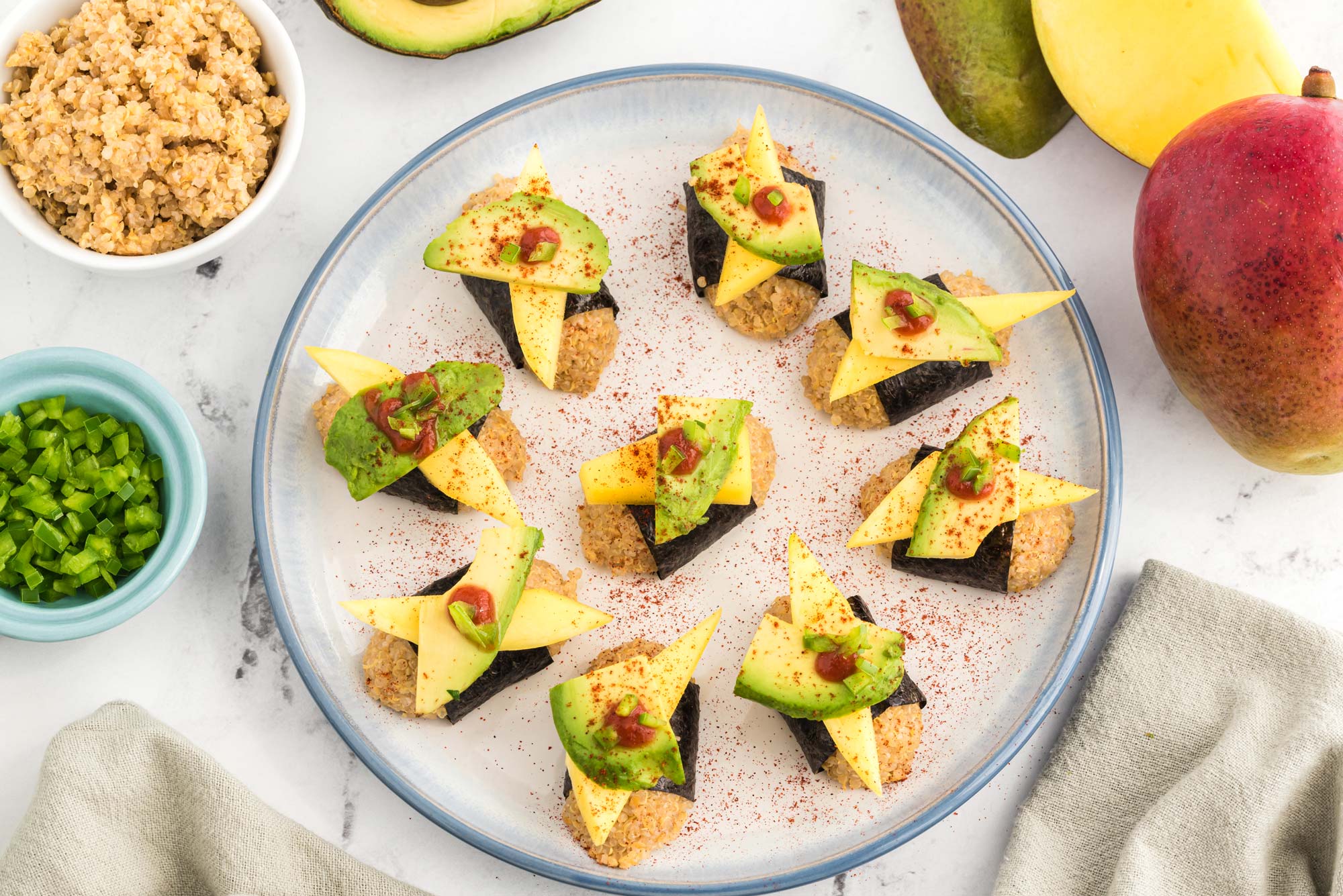
Sushi-making can bring out your inner artist! Forming the oval-like nigiri shape, wrapping the quinoa in nori, carefully placing the mango and avocado on top, and finishing it with a drop of Sriracha and a sprinkle of paprika make this piece of art almost too good to eat. Almost! Because it tastes pretty darn good, too, just be sure to take in your artistry before you dive in.
4. Rainbow Millet Roll with Miso Peanut Sauce
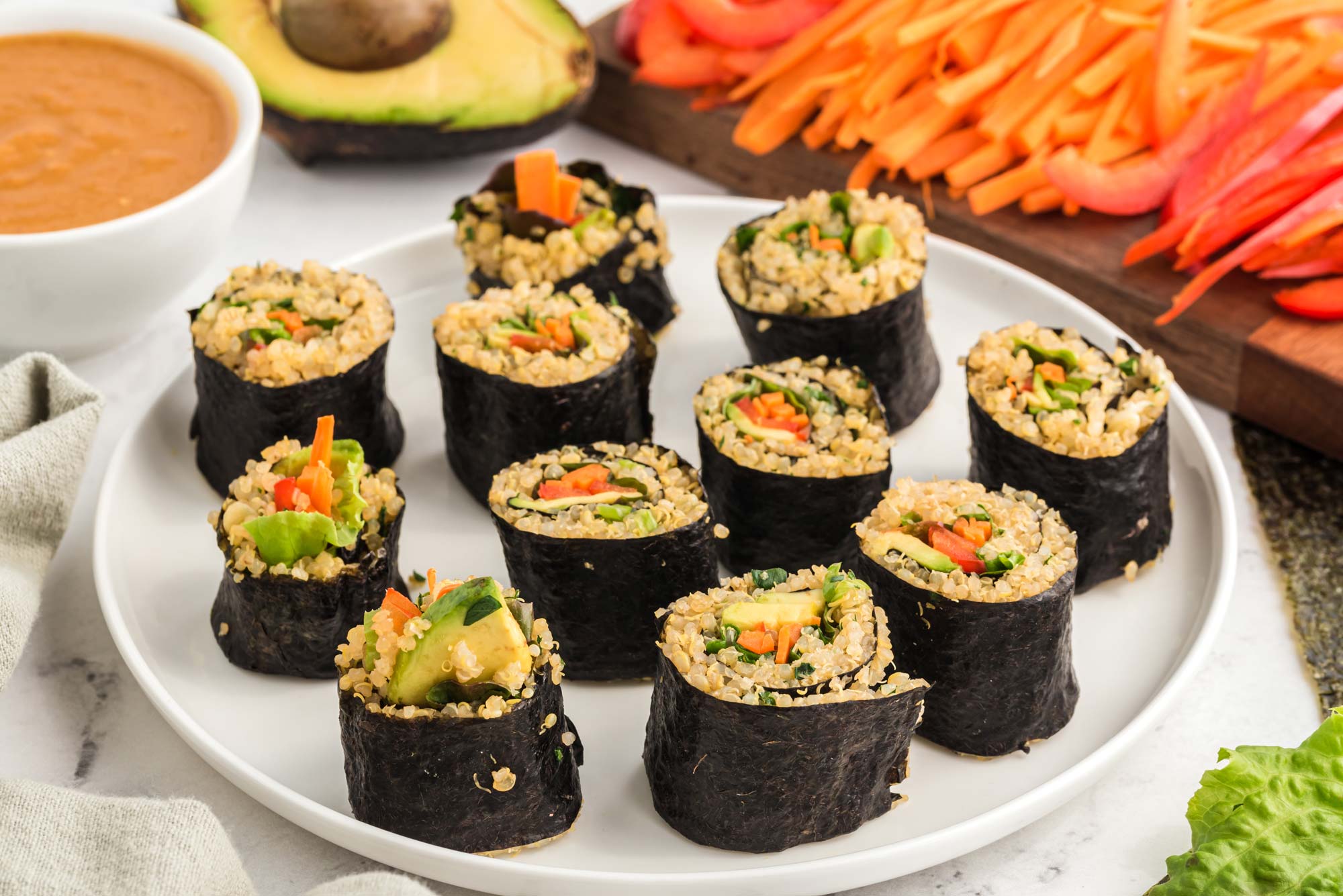
Set aside what you may think of as sushi and take the non-traditional route by using millet instead of rice, peanut sauce instead of soy sauce, and, of course, veggies instead of fish. What’s traditional about this plant-based sushi roll is the nutrient-packed nori seaweed that lends the sushi its crunchy texture and signature flavor.
5. Vegan Sushi Bowl with Wasabi Mayo
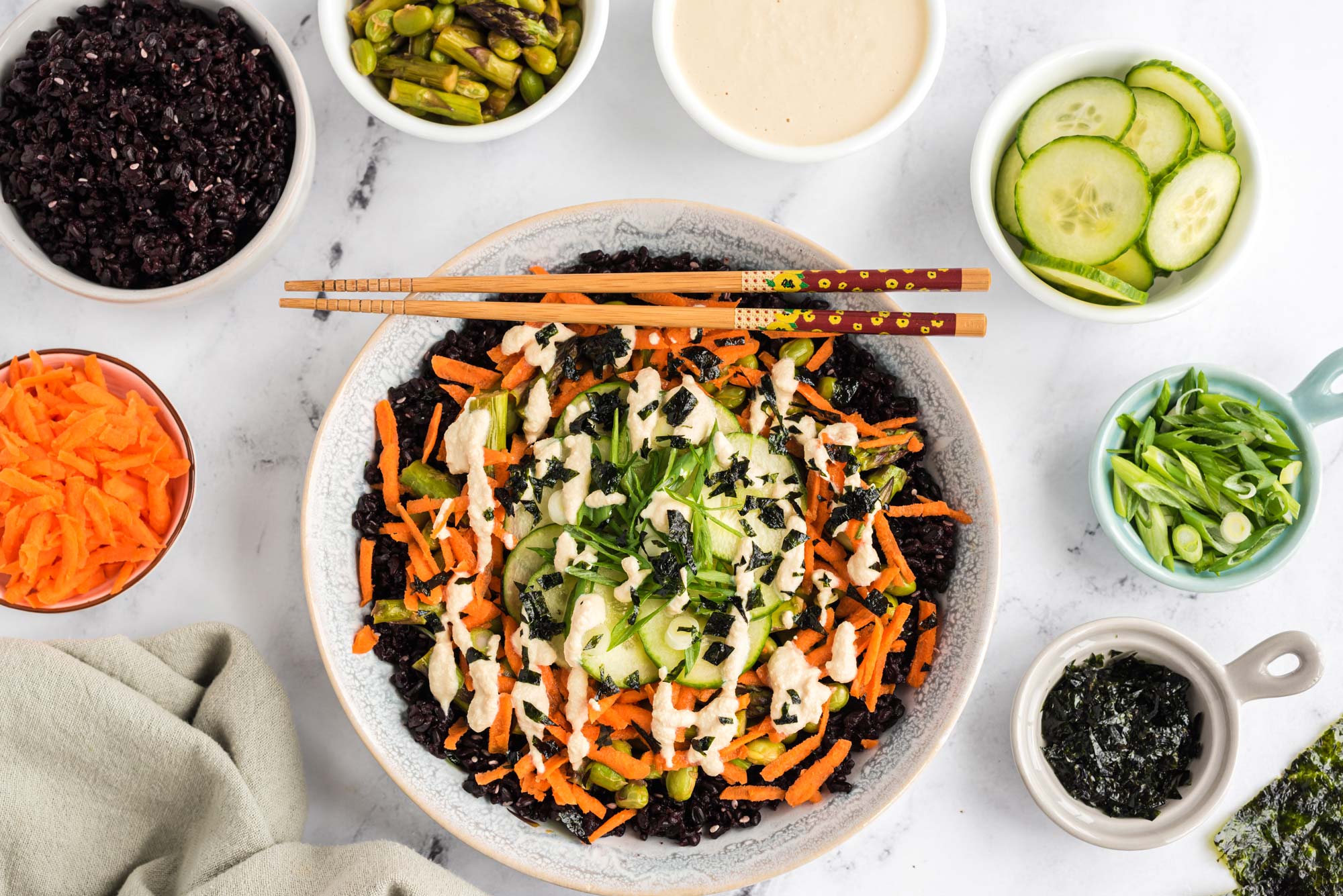
Vegan sushi roll transforms to Vegan Sushi Bowl, with all the usual tasty (vegan) sushi ingredients, but disassembled! Make it your own by using veggies from your fridge or garden. Pretty much any veggies are a-go here, but to truly create the sushi experience, don’t skip the sushi rice, nori sheets, or wasabi mayo!
Roll Up Some Fish-Free Sushi
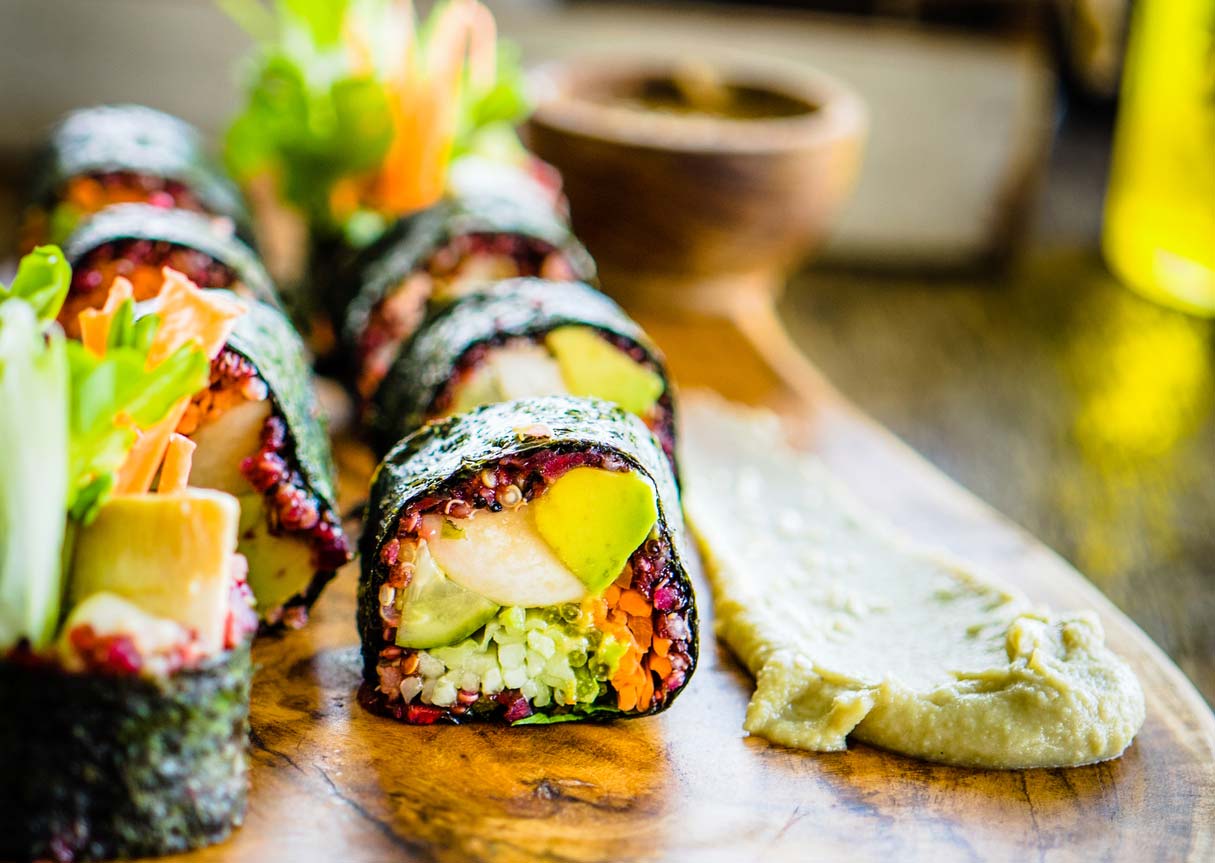
Sushi is a fun, portable dish that originated in Japan and has since spread around the world, becoming immensely popular. Although it’s often made with fish, vegan options that use a variety of plant-based ingredients are fun to make and delicious, too! So don’t be afraid to experiment, get creative, and give fish-free, vegan sushi a try!
Tell us in the comments:
- Have you ever tasted vegan sushi? What did you think?
- What ingredients do you want to try in your homemade vegan or vegetarian sushi?
- Have you tried any of the vegan “mock fish” sushi on the market? How did it taste?


