
Desserts are fabulous, right? They can provide a satisfying coda to a meal, and they can be eaten on their own. Some folks, noting life’s many uncertainties, even advocate eating dessert first!
Cold desserts get a lot of buzz, thanks to favorites like ice cream and popsicles, as well as standards like cheesecake and tiramisu. But warm desserts can be a big hit too. Think of a steaming pie or a warm, gooey cookie right out of the oven — they can satisfy and comfort us anytime, and especially on cold days.
But here’s the problem: The best-known warm desserts aren’t exactly healthy. They’re typically full of ingredients like white flour, refined sugar, and dairy.
The good news is that you can employ creative alternatives to enjoy warm desserts that are delicious, comforting, and good for you and those you love.
Types of Warm Desserts

While there are thousands of warm dessert recipes, most fall into one of a few basic categories. Let’s go through them here, and try not to salivate too much.
Baked fruit pies
Let’s face it — the key innovation for fruit pies is basically the edible plate. Fruit is cooked, often with a sweetener and spices, and then baked in a crust that hardens to hold it together. Some of the iconic fruit pies include apple, blueberry, peach, strawberry-rhubarb, and cherry. If you’re plant-based, leave out the four and twenty blackbirds. For Christmas, make sure there’s a plum floating right on top, so Jack Horner doesn’t destroy the whole thing with his thumb.
Fruit cobblers
Take a fruit pie, lose the crust, immerse the fruit in batter, and bake until it sets. Voila — a cobbler, which has nothing to do with shoemakers but may be related to cobblestones, thanks to the uneven surface of the topping.
Fruit crisps
Fruit crisps and their cousin, fruit crumbles, are baked fruit dishes topped with a crumbly topping. According to the internet, which is never wrong, crisps differ from crumbles in having a thinner layer of topping that includes rolled oats and nuts. Now you know.
Sweet breads and rolls
Humans do not live by bread alone — sometimes we need sweet breads. To be very clear, I’m not talking about “sweetbread,” which is a very misleading term for a dish consisting of the cooked gland of an animal. No, dear reader. I’m being totally literal here — I really mean a bread that is sweet. These can include things like cinnamon rolls, brioches, croissants, banana bread, babka, pastries, tea cakes, and panettone.
Brownies
Brownies are chocolate-flavored confections baked in a pan. They can be more cake-like or fudgy, depending on which team you identify with. For some reason, brownies are almost always square or rectangular, which means there’s probably a fortune to be made in trapezoidal or cylindrical brownies. Some are frosted, and others are bare. A less popular cousin, called the blondie, is more or less identical but leaves out the chocolate or cocoa flavoring.
Cookies
According to Wikipedia, the three qualities that make a cookie a cookie are its small size, flat shape, and sweet taste. Examples include the famous chocolate chip cookie, the oatmeal raisin cookie, the snickerdoodle, the macaroon, and New York City’s major contribution to world cuisine: the black and white cookie.
Bread puddings
Bread puddings arose as an attempt to make stale bread not only palatable but irresistible. To this end, stale loaves are typically soaked in milk, sugar, syrup, fat, eggs, dried fruit, and spices, and then baked. To be fair, this kind of treatment might turn a cardboard box into a tasty delicacy.
Fondue

There was a time when every thrift store in the US was overrun with fondue sets. They were the quintessential housewarming gift, regardless of whether someone would use one or not. Then fondue parties got hot once people figured out that you don’t just have to dunk bread and meat into gooey cheese. Dessert fondues include fresh fruit dipped in chocolate, pretzels dipped in caramel, and marshmallows in peanut or butterscotch fondue.
Turnovers
Turnovers are fillings wrapped in dough and baked. Many of these, like calzones, empanadas, and samosas, are savory. But the iconic apple strudel and fruit turnovers represent the dessert side of the turnover category.
Dumplings
Dumplings, at least the sweet kind, feature lumps of batter spooned onto fruit, which are then baked. Classic dessert dumplings include fruit flavors like blueberry, apple, and peach.
Warm Dessert Ingredients

As you read through that list of classic warm desserts, you may be wondering, “How on earth can I make healthy versions?” And it’s true, some of them are simply pleasures to be indulged on a very occasional basis (as in, Christmas Eve as opposed to, say, every weeknight).
But take inspiration from the story of James Naismith, who not only invented the game of basketball but also continually improved it by using baskets instead of boxes, then cutting the bottoms out of the baskets, and finally replacing baskets with nets. Just like James, you too can improve upon even the most decadent warm desserts by subbing out the most problematic ingredients with healthier alternatives. That way, you can keep them delicious and satisfying without compromising your health or your ethics.
Let’s look at the most impactful swaps you can make.
Sugar
Many desserts, both hot and cold, contain large amounts of refined sugar. Studies show that sugar is addictive, grabbing the same neural pathways as drugs like alcohol and cocaine. It can cause a whole host of health problems, including damaging your heart and brain. Some sugar is made from sugar cane, and some is made from GMO sugar beets.
Fortunately, there are a lot of ways to sweeten your warm desserts without refined sugar. Some sugar substitutes include whole fruits — especially sweet ones like grapes and strawberries (frozen and defrosted strawberries are especially sweet). Dates are another popular whole food alternative to sugar. You can buy dried dates at grocery stores, food co-ops, or online — and turn them into paste or syrup in your kitchen. Or buy a prepared date sweetener, ready for use, such as date paste, date syrup, or granulated date sugar. Organic stevia and xylitol also provide sweetness in the absence of sugar.
Dairy
Many of these desserts are traditionally high in dairy products. Lots of baked goods use milk, butter, buttermilk, and cream as ingredients. Some “hot out of the oven” warm desserts are traditionally served à la mode or “à la whipped cream” (that’s not a real phrase, is it?).
But dairy is implicated in many health issues. The high concentrations of saturated fat, especially in the thicker, creamier dairy products, have been shown to be detrimental to heart health.
And many people, especially those whose ancestry is not northern European, lack the ability to digest the main milk sugar, lactose, and therefore can suffer from a variety of uncomfortable symptoms when they consume it. Since milk is still marketed as a healthy food for growing strong bones, many people who are lactose intolerant don’t know it and simply put up with the discomfort of the condition without ever addressing the root cause. (Fortunately, there are many excellent plant-based sources of calcium. For more on the topic, click here.)
Dairy is also an environmental disaster. Factory-farmed cow operations release huge amounts of greenhouse gas emissions, drawdown aquifers because of their tremendous need for water, and pollute their surroundings. The hormones and antibiotics routinely fed to these cattle end up in our soil and water — and our bodies!
So it’s a good thing that there are so many awesome dairy alternatives that we can use to make our warm desserts. You can find commercial plant-based milks, ice creams, and whipped creams. You can also make your own to avoid problematic additives.
Make vegan buttermilk by adding lemon juice or organic apple cider vinegar to a plant-based milk. Organic apple sauce can be an excellent substitute for oil in baked goods. And if the butter in your recipe serves as a binder, you can substitute applesauce (it’s so versatile!), avocado, and nut butters to hold your mixture together. If you’re looking for that creamy consistency and taste, blend tofu or soaked nuts and use that to replace the cream.
Eggs
Some of the issues surrounding dairy also apply here. Egg-producing factory farms are perhaps even crueler than dairy operations. The environmental impact of large egg facilities is devastating to local communities and the planet as a whole. While small backyard operations can be sustainable, that’s not where commercial eggs come from. And it usually takes way more water, land, and greenhouse gas emissions to feed chickens that produce eggs than to use those resources to feed humans directly. Furthermore, large amounts of egg consumption are linked to health issues such as heart disease and type 2 diabetes.
There are many plant-based ways to get egginess into your baking without the eggs. You can now buy commercially produced egg substitutes such as Just Egg. And there are several powdered egg replacers that you can deploy by adding water. You can also go low-tech but high-function by mixing your own flax or chia eggs. Pureed fruit can also provide the liquid and binding power of eggs.
White Flour
Flour in and of itself isn’t necessarily a problem in moderation (see my Editor’s Note, below), especially when it’s whole grain. But most commercially baked desserts and most mainstream dessert recipes call for white flours, which are not only highly processed but also often bleached to make them whiter. The nutrients are stripped away, or may be added back in the form of synthetic vitamins.
And unless the wheat flour is organic, it may be contaminated with glyphosate, an herbicide identified as a potential human carcinogen and potentially harmful to soil and aquatic life.
This would have been a controversial statement until quite recently; A much-cited study published in Regulatory Toxicology and Pharmacology in 2000 concluded that the herbicide “does not pose a health risk to humans.” In a stunning development, the journal’s editors retracted the study in late 2025, claiming it may have been ghostwritten by employees of Monsanto, the company that first introduced glyphosate to the market in 1974.
Even if you’re enjoying organic wheat flour, you may want to take it easy on quantities. Too many refined carbohydrates can lead to sugar spikes, which, over time, can damage your health.
Healthier alternatives to white flour exist. If you’re allergic or sensitive to wheat, you can still enjoy gluten-free flours and flour-free recipes for your warm desserts. Some of these are highly processed, but you can also buy or make healthy versions. Ground organic rolled oats and other whole grains can substitute for wheat flour. If you’re avoiding grains entirely or want a fattier flour, consider almond or garbanzo flour. If you can handle gluten, you can bake with organic 100% whole wheat flour.
Ways to Eat Warm Desserts

So now that you’ve just gotten a Master’s Degree in Warm Dessertology, how can you re-welcome warm desserts into your healthy life?
Well, for starters, you can just enjoy them on their own. If you want to get all Downton Abbey (or Bridgerton, or Upstairs Downstairs, depending on your preferences and generation), you can accompany them with hot coffee, tea, or another warm beverage. Remember to take dainty bites and keep at least one pinky elevated at all times.
If you’re going to relegate these warm desserts to rare treats, a good time is at the end of a holiday meal. You can pair them with plant-based ice cream or whipped cream if you want to wow your guests.
You can share them — what a thought! — with others as part of a potluck or dessert tasting menu. This can lead to a wonderful game of “Fooled you — this is actually vegan!”
And you and your loved ones can curl up and enjoy some of these scrumptious warm desserts while watching your favorite seasonal or holiday movie (like It’s a Wonderful Life or It’s Tax Day, Charlie Brown!).
However and wherever you choose to indulge, make sure you eat slowly, enjoying every bite, and give thanks for whatever in your life deserves gratitude. That kind of mindfulness makes everything just a bit sweeter!
7 Comforting Warm Dessert Recipes
Finally (I hear you!), we’re getting to the actual warm, comforting, nourishing, and nutritious recipes. The whole food, plant-based ingredient lists belie their ability to transform into seemingly indulgent desserts. I hope you will experience firsthand the culinary joy that is Cozy Baked Apple Slices, Ooey Gooey Strawberry Crumble, Chocolate Walnut Brownies, and more. We look forward to reading about your experiences on the recipe pages.
1. Cozy Baked Apple Slices
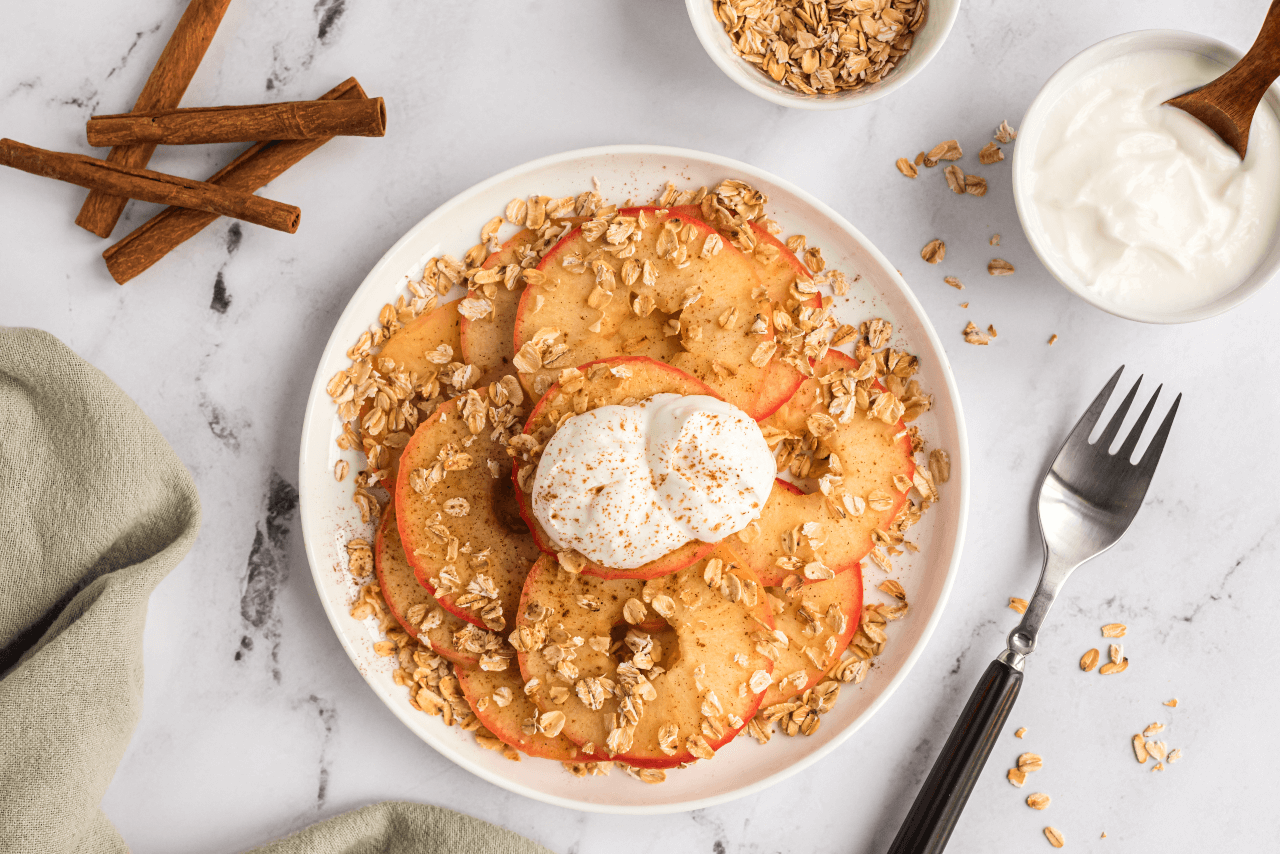
So simple, yet so scrumptious, apples take center stage as a warm dessert you are about to fall in love with. The beauty of warm apples is that they can be enjoyed solo or topped with plant-based yogurt, alongside “nice” cream, or topped with your favorite homemade granola (yum, yum, and yum!). No matter how you enjoy it, this cozy treat will give you all the feels from head to toe.
2. Ooey Gooey Strawberry Crumble
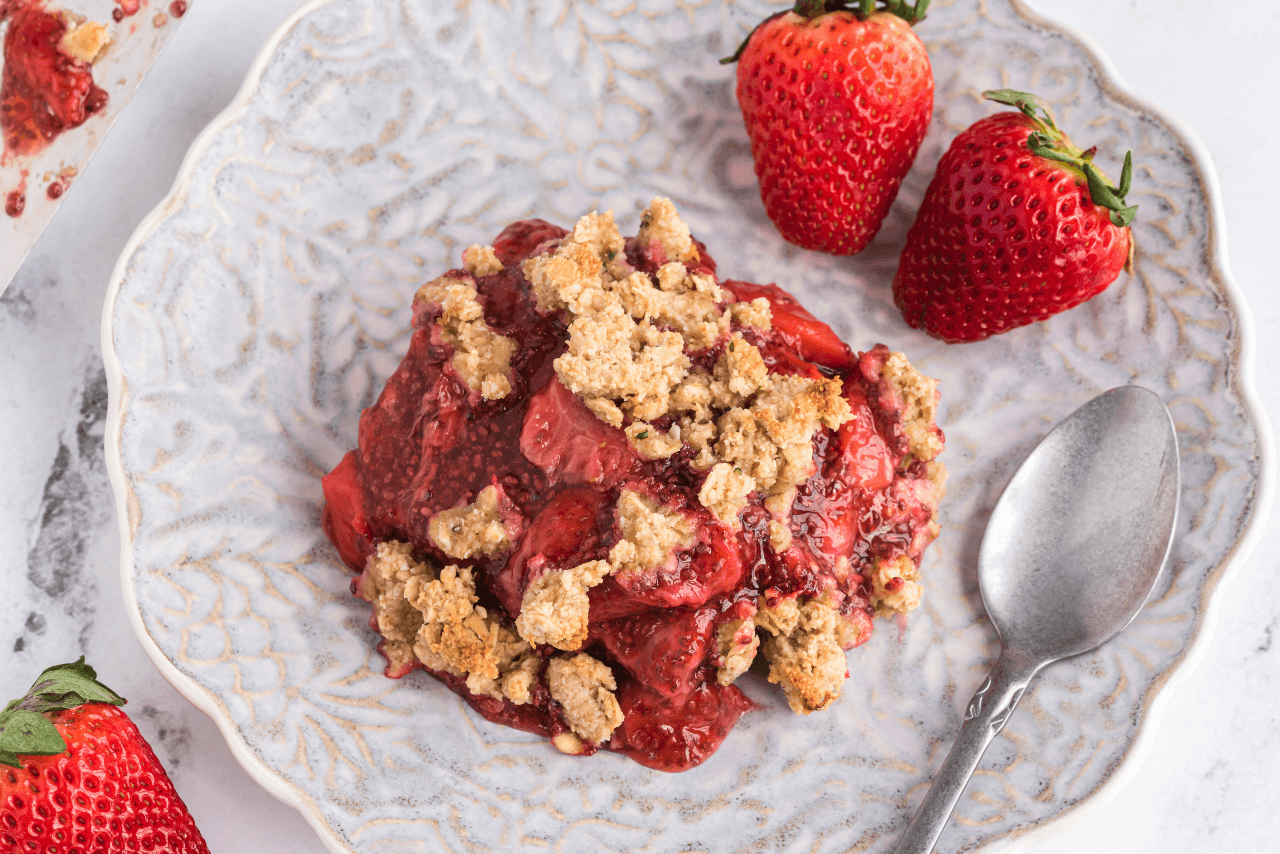
This warm dessert is everything — crunchy crumble, gooey strawberries, and heavenly flavor. This is one that the kids are going to love (big kids too!). Strawberries are packed with vitamin C, chia seeds and oats are loaded with fiber, and almond meal and hemp seeds bring plenty of plant-based protein. Shhh…we won’t tell them that not only is it delicious, but it’s good for them too!
3. Banana Walnut Bread

This Banana Walnut Bread certainly qualifies as a warm dessert — it’s naturally sweet, nutty, moist, and perfectly satisfying. We suggest serving it with banana nice cream for a special after-dinner treat. Bonus: Since it’s packed with fiber, plant protein, and tons of phytonutrients, you can also serve it as a snack or for breakfast!
4. Sweet Cherry Cobbler

If you’re not enjoying sweet cherries, in-season or frozen, you’re missing out on both flavor and nutrition. Cherries are known for their nitric oxide-boosting effects, which dilate blood vessels and increase blood flow. They’re also chock-full of antioxidants that scavenge free radicals, helping to prevent lifestyle diseases. Enjoy them in this warm, sweet cobbler for a cozy treat that will excite your taste buds and soothe your soul.
5. Warm Open-Faced Pear Pie

Warning: You might want to make two of these, so there are no arguments over dessert in your house. Or, if you want to welcome a new neighbor, make this and bring it over fresh from the oven. Pecans and dates create a perfectly crispy crust, while pears bring the ooey-gooey sweetness to the filling. Enjoy with a scoop of plant-based ice cream!
6. Chocolate Walnut Brownies
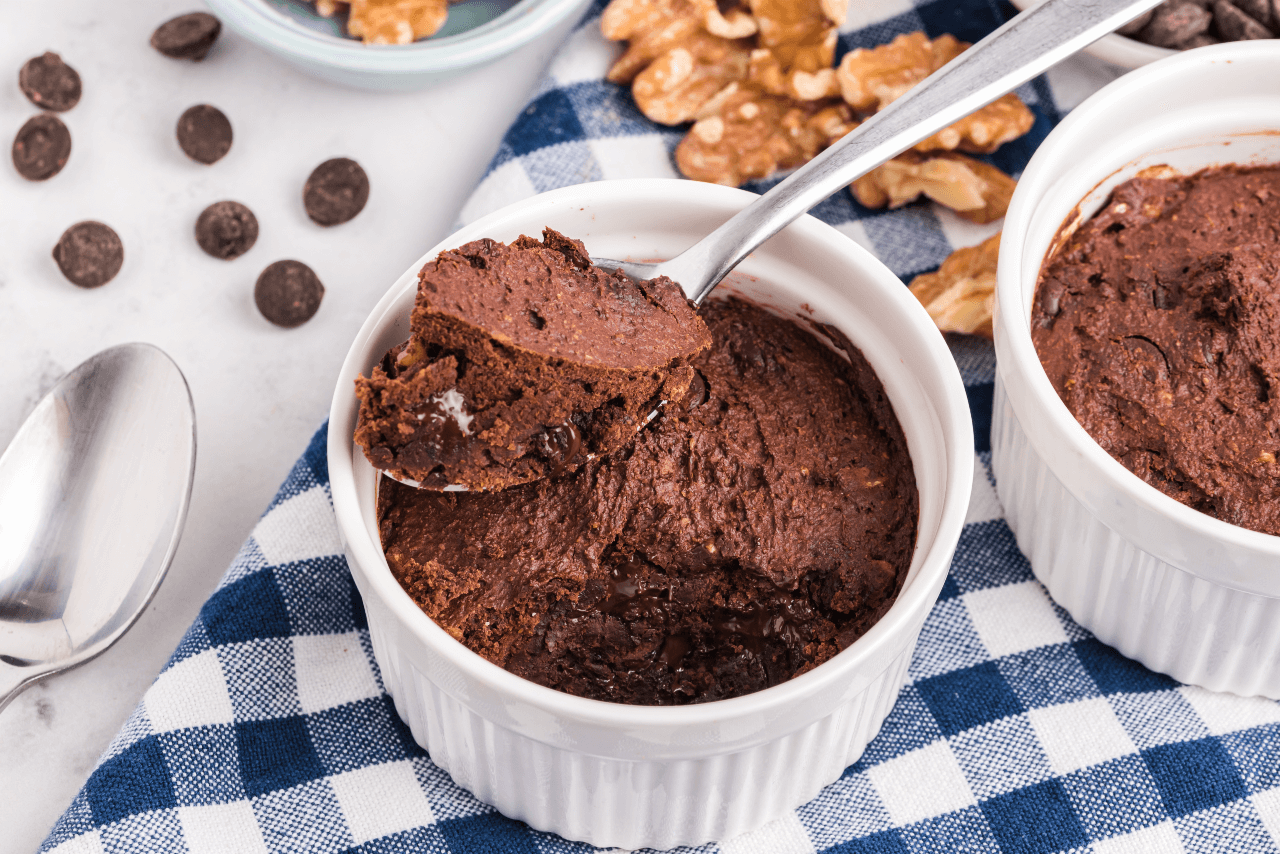
Calling all chocolate lovers! This delectable brownie will delight all of your senses with its crispy outside, dense inside, and flavor explosion from the moment you bite into it. Don’t have an air fryer? No problem! Make them in the oven (see Chef’s Notes) instead. Either way, you’ll be getting nutritional goodness from the oat flour (fiber), dark chocolate (antioxidants), flax meal (omega-3s), and banana (prebiotics).
7. Chocolate Chip Chickpea Cookies
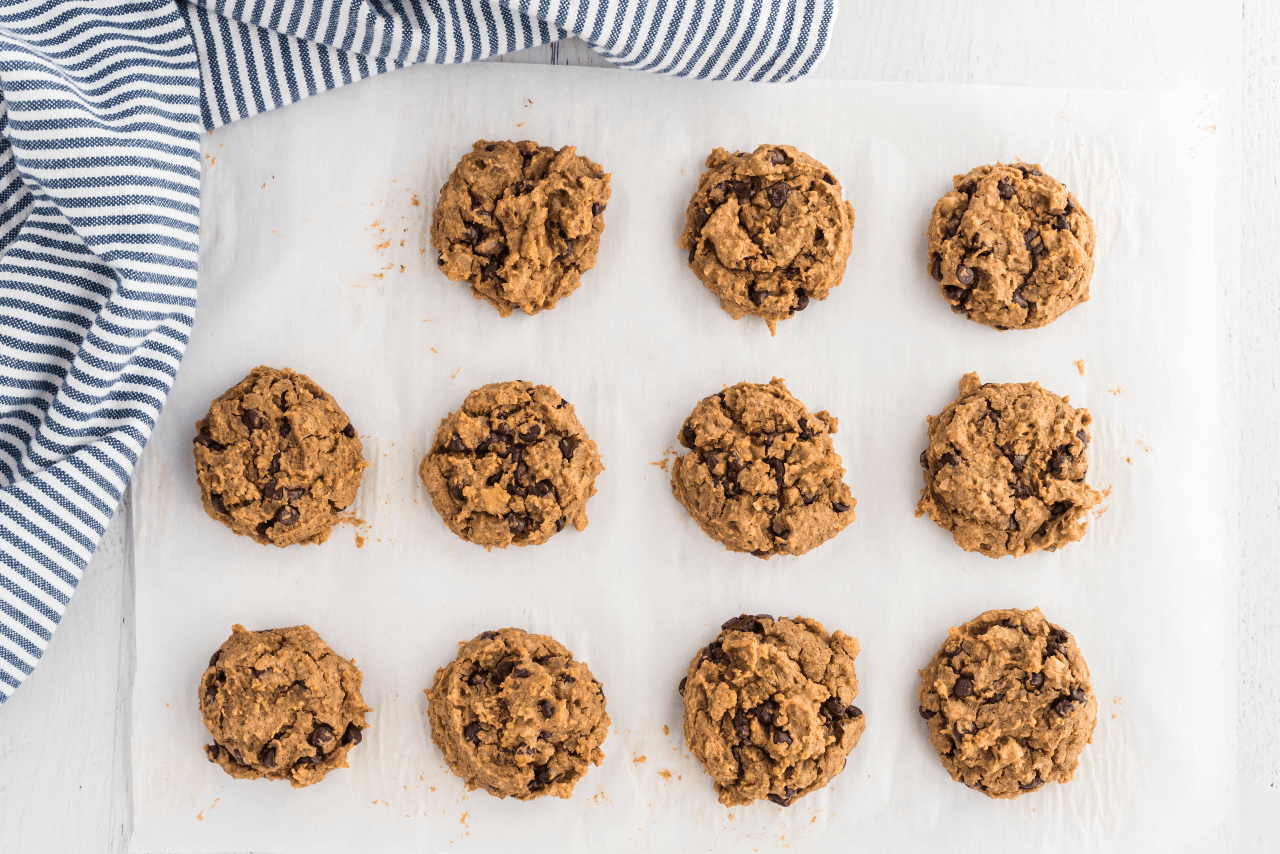
This recipe is sure to confirm your notion that chickpeas are pretty magical. High-protein, high-fiber garbanzos make the most delicious chocolate chip cookie dough, which you can bake into a soft, chewy treat. With 7 grams of protein and over 5 grams of fiber per serving, plus flavor to boot, you won’t go wrong with this warm, tasty, and nutritious snack!
Cozy Up with a Warm, Healthy Dessert

Warm desserts can be comforting and delicious, especially during the colder months. While they don’t traditionally contain the healthiest of ingredients, there are plenty of healthy, plant-based substitutions you can make to improve upon the classic recipes. I hope this article empowers you to enjoy warm desserts in a variety of ways. And I hope you’ll let us know your favorite healthy, warm dessert recipe.
Tell us in the comments:
- What’s your favorite warm dessert? How can you make it healthier for yourself and gentler on the planet?
- Which of the warm dessert recipes above will you try first?
- What occasion will you choose for sharing a healthy, warm dessert with others?

