

When I first heard about air fryers, I thought of all the ridiculous single-use appliances that start as fads and end up cluttering our kitchen counters — and then the shelves of thrift stores, and eventually our landfills: hot dog heaters, burger makers, six-wedge quesadilla or panini presses, cupcake makers, and so on.
Things can get pretty crazy out there in our commercial culture. You can clutter up your counter with a mini donut oven, a soft pretzel maker (complete with cheese dip warmer), and a chocolate fondue fountain.
At first, the air fryer seemed to be heir to that tradition: another hunk of plastic that does one single thing and is quickly relegated to the category of “purchases I regret.” But so many plant-based chefs and bloggers started talking about how the thing changed their lives, that I finally relented and opened my mind.
And I’m glad I did. The air fryer isn’t another single-use gadget. Instead, it’s a way to enjoy a wide variety of crispy, crunchy comfort foods without added oil. Many people who own one report using it multiple times a day, and creating dishes that entice even the pickiest fast food eaters to gobble down plant-based and oil-free chips, wedges, fries, and wings.
And the trend appears to be “heating up,” as it were (pun fully intended). The global air fryer market is projected to grow from roughly $1.4 billion in 2024 to around $2.9 billion by 2034.
They’re popular, but are they healthy?
If you’re interested in answering that question, along with which one might be best for you, how to use them properly, and what you can make with them, read on for our guide to air frying.
Introduction to the Air Fryer


The air fryer’s technology was invented by Dutch entrepreneur Fred van der Weij. It made its first public appearance at the 2010 Berlin IFA consumer electronics fair, where it generated considerable buzz. Philips, the company that introduced the air fryer, had been working on a method to fry food with less fat for several years, utilizing a combination of heat from halogen bulbs and strong airflow inside the device.
The form factor (essentially the size, shape, and other physical specifications), in the shape of a large egg, made the new product friendly and approachable, and also facilitated ease of cleaning. (That’s one of the big advantages of air frying, especially for people who aren’t concerned about their consumption of fried, oily foods, is that it makes so little mess and is so easy to clean compared to traditional frying.)
In the intervening years, the air fryer has overtaken the Instant Pot as the new, super-popular appliance, changing how we do things in the kitchen. Far from being a single-purpose appliance for frying food, air fryers can cook pretty much anything without the need for oil.
It makes sense — no one likes soggy food, especially when the texture should be crispy. Crunchy food appears to appeal to some deeply held instinct — perhaps the sense that fresh fruits and vegetables are at their best when they’re at their crunchiest, and so some part of our brains identifies crispness as a good proxy for “healthy.”
What Is an Air Fryer?

OK, let’s get specific. Air fryers are kitchen appliances that use heated air to cook food in a contained space. This allows for a crispy texture without the need for oil. Air fryers have a fan that circulates hot air (like a convection oven) to cook food quickly in a mesh basket (or tray) from the outside in.
Their small size — most range in capacity from two to six quarts — has two advantages: They cook food quickly, allowing for crisping without burning or drying out, and they take up relatively little counter space. If you have room for a coffee maker, you have room for an air fryer.
Some models retail for as little as $40, while others will set you back $300 or more, depending on the brand and features. If you’re interested, keep your eyes peeled for sales, especially during the holidays, as they’re currently a very popular gift.
Now, to be clear, humans have been browning and crisping food for millennia, long before the air fryer was invented. The advantage of this new appliance is that it takes a shorter time and often doesn’t require preheating. In addition to frying, most models can also bake, grill, and roast — all without the need for added oil.
I don’t know what this says about us, but despite the versatility of air fryers, most people still use them for just one primary purpose: air-fried potatoes.
Pros and Cons of Air Fryers
Like most things in life, air fryers are not perfect. So, let’s look at the good, the bad, and the concerning when it comes to these popular appliances.
Pros of Air Fryers
1. Little to no oil is needed when air frying.
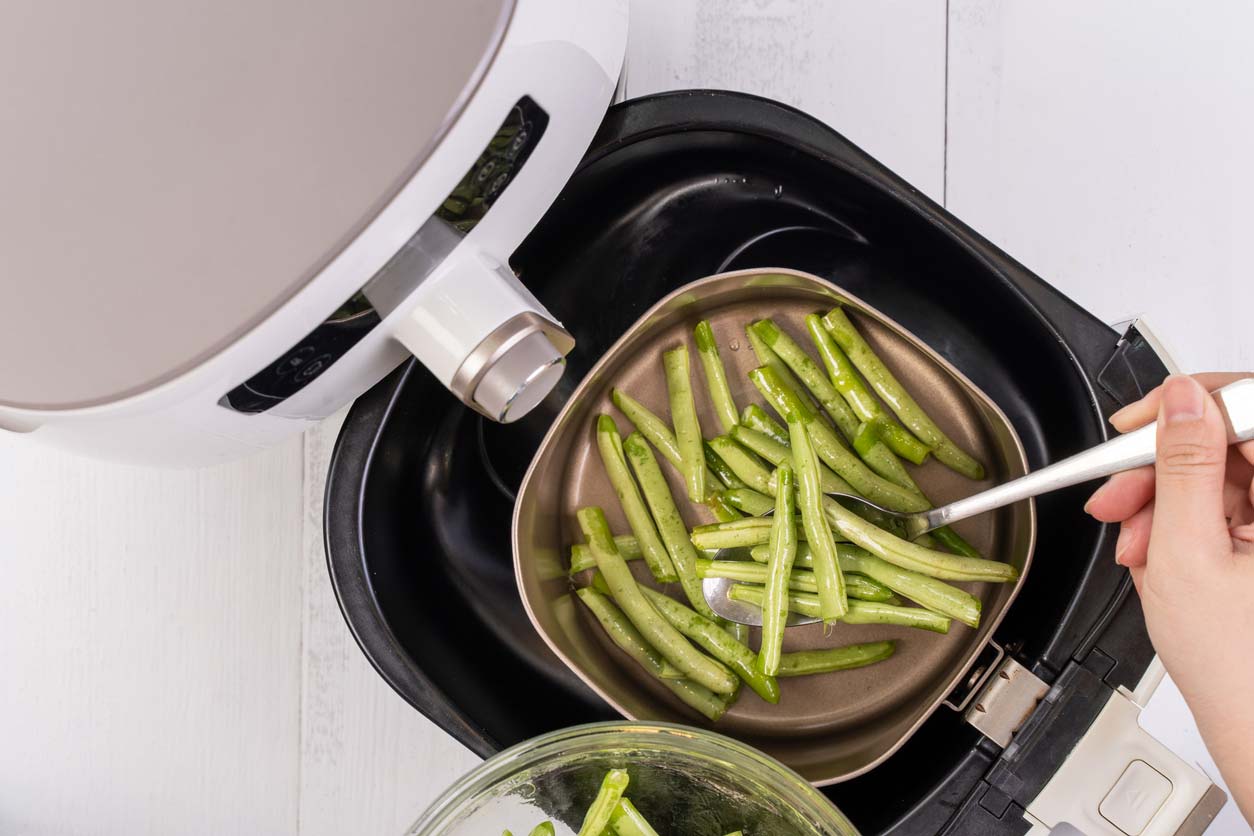
The big selling point of the air fryer is frying with little or no oil. It’s possible to get crispy fries and other favorite appetizers (wings, mozzarella sticks, croquettes, dumplings, and so on) either with just a fraction of the oil to coat the food or with none at all. That way, you can consume far less bottled oil and total calories, which can aid weight loss.
A quick health note here: Heated vegetable oil can increase the risk of heart disease, especially when that oil is reheated repeatedly, as in commercial fryers found in restaurants. While a tablespoon of oil is clearly preferable to a quart, it’s likely better for your health to air fry with no added oil when possible.
2. Food cooks quickly in an air fryer.
Air frying is also quick and easy compared to deep frying, and indeed, compared to just about any other type of cooking method, except for microwaving (for more on the pros and cons of microwave ovens, click here).
Because many models don’t require preheating like convection or traditional ovens, they cut down on cooking time. This is especially true when you’re cooking frozen items, like pre-cut fries and veggies. You can just chop up vegetables and other foods, or throw the frozen veggies straight in. A bag of frozen broccoli or cauliflower can turn into a delicious roasted side dish in just a few minutes.
3. They’re good for reheating leftovers.
Air fryers are also great for reheating leftovers, which can reduce food waste. When you reheat leftovers in the microwave, their texture often changes (and seldom for the better). With an air fryer, you can restore the heat, firmness, and crispiness to your meal. And as they get fancier, many air fryer models include pre-programmed settings for cooking specific foods (typically they are set for things like fries, fish, etc).
4. Air fryers are versatile.
As mentioned, air fryers are far more versatile than their name suggests. Some can dehydrate food as well as crisp it. Some models, especially those shaped like large toaster ovens, are also multi-use and can bake, roast, and reheat, too. Still others boast multiple baskets, allowing you to cook different foods simultaneously.
Air fryers are worth it if you’re using them to cook healthy foods. They’re excellent for cooking vegetables and other plant-based foods.
Consumer Reports found that air-fried asparagus, cauliflower, kale chips, and corn on the cob received rave reviews from their child testers. And adults appreciated the roasted Brussels sprouts and potatoes. NBC News’ air fryer guide recommends air frying mushrooms, eggplant, okra, green beans, and chickpeas.
The nice thing about air fryer veggies is how crisp they get, especially compared to cooking methods like microwaving, which are famous for producing a soggier texture. Using an air fryer, then, can help get kids, or other picky eaters, to consume more vegetables.
5. They produce low levels of pollutants compared to other cooking methods.
A 2024 study from the University of Birmingham compared the emissions of particulate matter (PM) and volatile organic compounds (VOCs) from five different ways of cooking chicken: pan-frying, stir-frying, deep-fat-frying, boiling, and air frying. The researchers discovered that air fryers produce a tiny fraction of the indoor air pollution emitted by other cooking methods.
Cons of Air Fryers

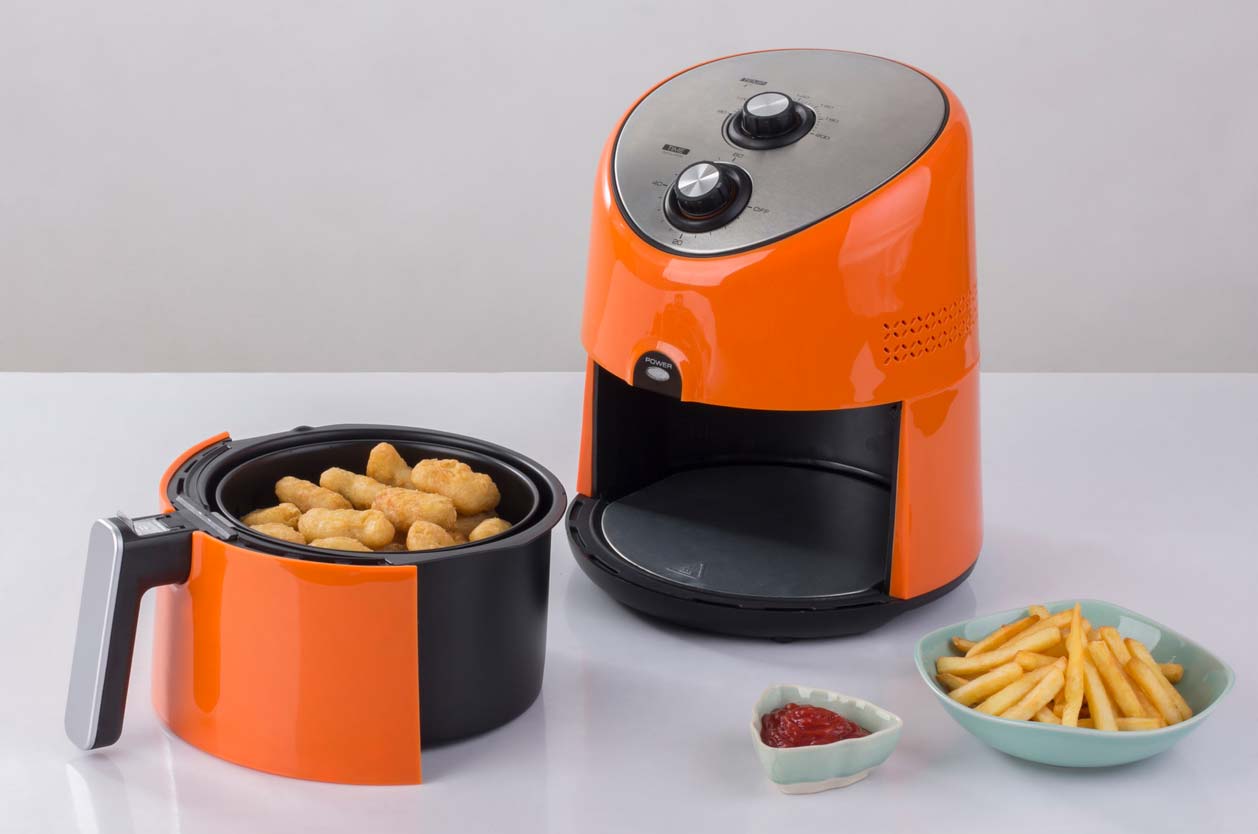
Of course, all is not perfect in air fryer land. Let’s continue our pros and cons of air fryers by examining what’s not so good about them.
1. They generate acrylamides.
Some tests have found that air fryers actually generate more acrylamides than deep frying, especially in starchy foods like potatoes. That’s concerning because while acrylamides are found in many natural foods, and are impossible to avoid completely, excessive amounts can cause mutations that may lead to cancer. Fortunately, there are ways you can reduce acrylamide levels when using an air fryer.
When air frying potatoes, cook them at or below 356 F (180 C). You’re looking for a golden brown texture. If they’re too brown, that’s a sign that higher levels of acrylamides could be developing in the crust. Other acrylamide-reducing techniques include storing potatoes at room temperature rather than in the fridge, and pre-soaking them before cooking.
2. Some air fryers are hard to clean.
While some air fryers are easy to clean, others demand a lot of time, attention, and elbow grease. While the closed basket may feel like “out of sight, out of mind,” you do need to clean it regularly to prevent it from becoming, well, a gross health hazard. If you do use any amount of oil, the basket can become sticky and greasy. Even oil-free food particles can become stuck on the mesh. Baskets with lots of nooks and crannies can be especially hard to clean. Here’s a helpful article with instructions on how to keep your air fryer clean and ready for use.
3. They have a small capacity.
Another problem with air fryers, especially if you’re feeding a lot of mouths, is their relatively small capacity. Basically, the larger the volume, the less the food will seem “fried” and the longer it will take to cook. So there’s a tradeoff between the taste and the amount you can cook.
Air fryers will make batches that can feed a family of four or fewer. And depending on how hungry everyone is, even four people may need a couple of batches to satisfy their hunger. Different models advertise their capacity, but the actual capacity is often smaller than claimed.
You may be tempted to fit more food in by crowding the basket, but this defeats the purpose of air frying. The food may not cook evenly, and won’t come out crispy.
4. Many models have Teflon coatings.
Most models of air fryers use Teflon or a similar non-stick coating, since convenience and ease of cleaning are hot selling points. The baskets themselves — the parts that come in contact with food — may have chemical coatings that contain PTFE (aka Teflon) and PFOA (a compound used to manufacture PTFE). Look out for these non-stick coatings, or any model where plastic touches the food, as heat causes them to release chemicals that may be toxic.
5. It’s not a set-it-and-forget-it appliance.
If you’ve joined the Instant Pot revolution, one of the nicest features is that you can “set it and forget it.” You don’t need to babysit the appliance, as it will cook on a timer and then keep it warm until you’re ready to eat. Air fryers are different, however. You often need to flip food, just as you would in a regular oven, to prevent it from burning on one side. And since few air fryers have transparent windows, you may need to keep opening the basket to check on the cooking status.
Some poorly made models are even reported to be fire hazards. One viral video from June 2021 shows a short-circuited air fryer throwing off flames as a four-year-old girl in a tutu frets, then runs to alert her father that their house is in danger. Yikes!
6. Airfrying may encourage junk food eating.
Finally, any cookware is only as healthy as the food you put in it. Given the easy and cheap availability of packaged frozen fried foods like potato fries, chicken wings, mozzarella sticks, and so on, one of the cons of air fryers is the possibility of turning your kitchen into a home-based fast food restaurant.
Air Fryer Recommendations
OK, enough beating around the basket. If you want an air fryer, what’s the best one to buy?
The answer, as with most things in life, is “it depends.”
Ninja Air Fryer Pro 4-in-1 or XL 6-in-1
The Ninja Pro 4-in-1 and 6-in-1 models are priced at around $100-$200, depending on the size. With their classic basket design and simple keypad, these air fryers are both on the larger side, measuring five and six and a half quarts, respectively. The baskets are non-stick and coated in ceramic, so they don’t contain the chemicals in some non-stick surfaces that can off-gas and cause health problems. They’re also easy to clean, as all food-touching parts are dishwasher-safe. Home and Gardens lists this air fryer as their top pick.
Yedi Evolution Air Fryer
Another healthy option is the Yedi Evolution Air Fryer. It’s a beast at 6.8 quarts, and also includes a ceramic non-stick coating, which is advertised as lead- and cadmium-free. Currently priced around $100-$130, it’s a good option if you have a large family. It also comes with a lot of accessories, including a muffin pan, pizza pan, steaming sheets, and grill rack.
Big Boss Air Fryer
If you like watching your food cook, the Big Boss Air Fryer may be the appliance for you. Unlike other models housed in (typically black) plastic, the Big Boss is mostly see-through, featuring a 16-quart glass bowl into which you can place the fryer basket and other accessories. It’s currently priced at around $100-$130. The glass and stainless steel construction guarantees that no nasty chemicals will off-gas or rub off on your food.
Fritaire Glass Air Fryer
The Fritaire Glass Air Fryer stands out from the crowd by doing something bold: replacing the usual opaque coated basket with a borosilicate glass bowl so you can see your food crisp in real time. This design not only satisfies from a performance standpoint but also aligns with a stronger health-and-safety focus. It’s BPA-free, Teflon/PTFE-free, and marketed as “non-toxic,” making it a compelling choice for those seeking an air fryer built with safer materials.
On the flip side, while the glass bowl and stainless steel rack tick the material-safety boxes, the Fritaire does require some trade-offs. Its 5-quart bowl is generous but unusual in shape — meaning you may need to cook in a single layer for optimal crisping, and the exterior (or accessories, such as the rotisserie arm) may feel less refined than premium models. It’s currently priced at around $200.
What to Do with Your Air Fryer
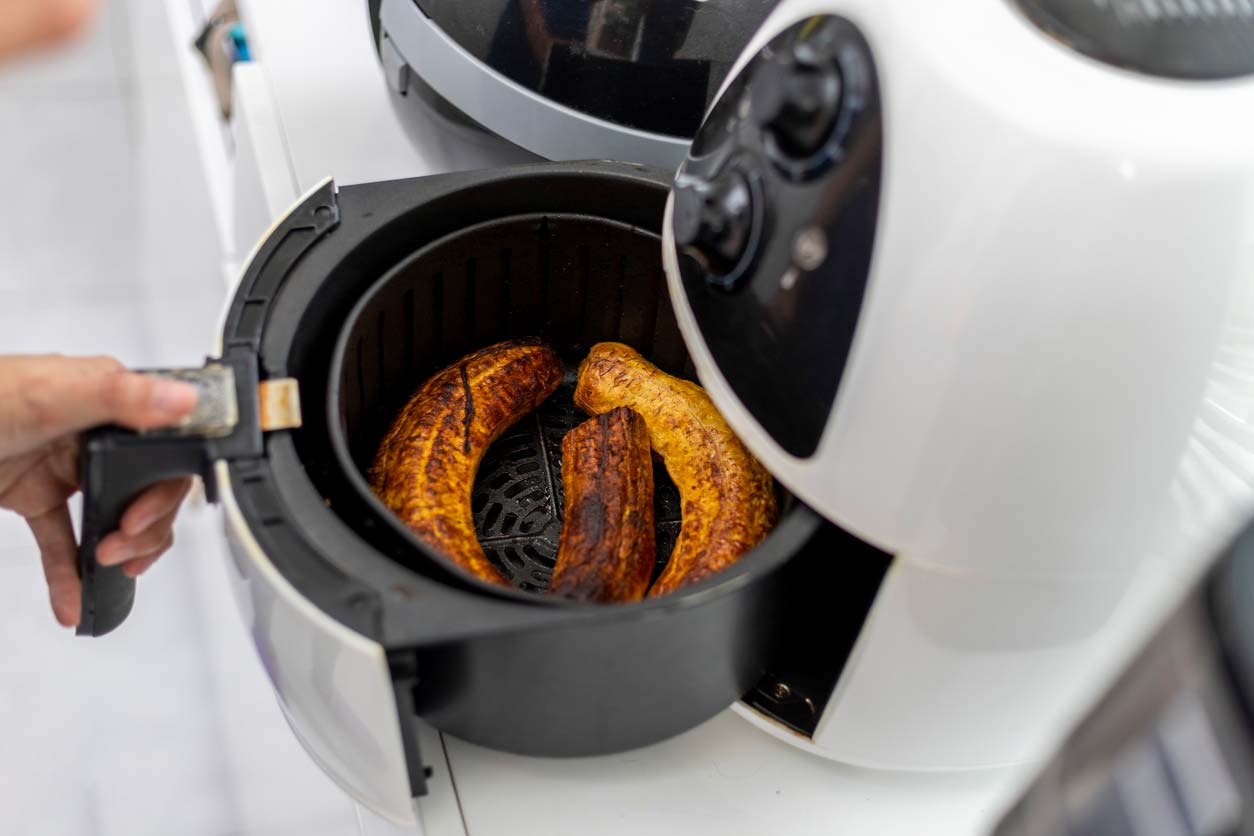
If you choose to get an air fryer, what will you do with it besides preparing frozen, French-fried potatoes?
Once you get the hang of it, you can use an air fryer for a variety of foods and types of meals, including snacks, appetizers, full meals, sides, and even desserts.
First, it’s good for potatoes and sweet potatoes. To save money and your health, cut them up yourself instead of buying frozen fries, tots, and so on. That way, you’ll avoid unhealthy oils, sweeteners, excess sodium, and other potentially problematic ingredients.
Second, you can air fry other frozen and fresh veggies that you’d normally bake or roast. Veggie and tofu nuggets come out crispy and chewy, making them a great substitute for meat in bowls, stews, and soups.
Another favorite is crispy chickpeas. You can just open a can, drain the liquid, and coat the chickpeas with your favorite spices. Then, air fry them until they crunch just how you like them. You can snack on them as is, or add them to salads in place of croutons.
Nuts roast well in the air fryer, too, without the constant stirring and shaking required to keep them from burning in a stovetop pan — and in far less time than in a conventional oven.
You can also reheat leftovers quickly, with little mess. And don’t get me started on the deliciousness of air-fried plant-based pizzas, with a crispy crust and a bubbling layer of tomato sauce and roasted veggies.
How to Use an Air Fryer


In terms of specific how-tos (what buttons to press; how to arrange the food in the basket; how long to cook), instructions will vary by model. But there are some basic steps on how to use an air fryer that seem to apply to all or most models.
- Depending on how you want to cook your food, use the appropriate air fryer accessory: rack, crisper plate, multilayer rack, etc.
- Don’t overcrowd the food in the basket. Basically, the individual items in your air fryer basket should not be touching each other. Having space between chips or fries ensures that their entire surface browns fully.
- Preheat according to the instruction manual — if your unit has a preheat feature.
- You can set the time and temperature or choose a preset setting. Many models come with a chart of air-frying temperatures and times, depending on the food, volume, and your preference for doneness.
- Push the start button (or whatever button initiates cooking on your unit). You’ll know it’s working if you can hear the fan.
- Shake, toss, or flip the food halfway through to cook it evenly and prevent burning or sticking. Check the basket or accessory frequently to prevent overcooking, and to see if it’s at your preferred “done point.”
Healthy Air Fryer Recipes
To make sure you and your air fryer get off to a good start, here are some “made from scratch” air fryer recipes to show you how easy, delicious, and healthy life can be with an air fryer. Put these on your table, raise a glass to Fred van der Weij, and enjoy!
1. Sweet Potato Kale Bites
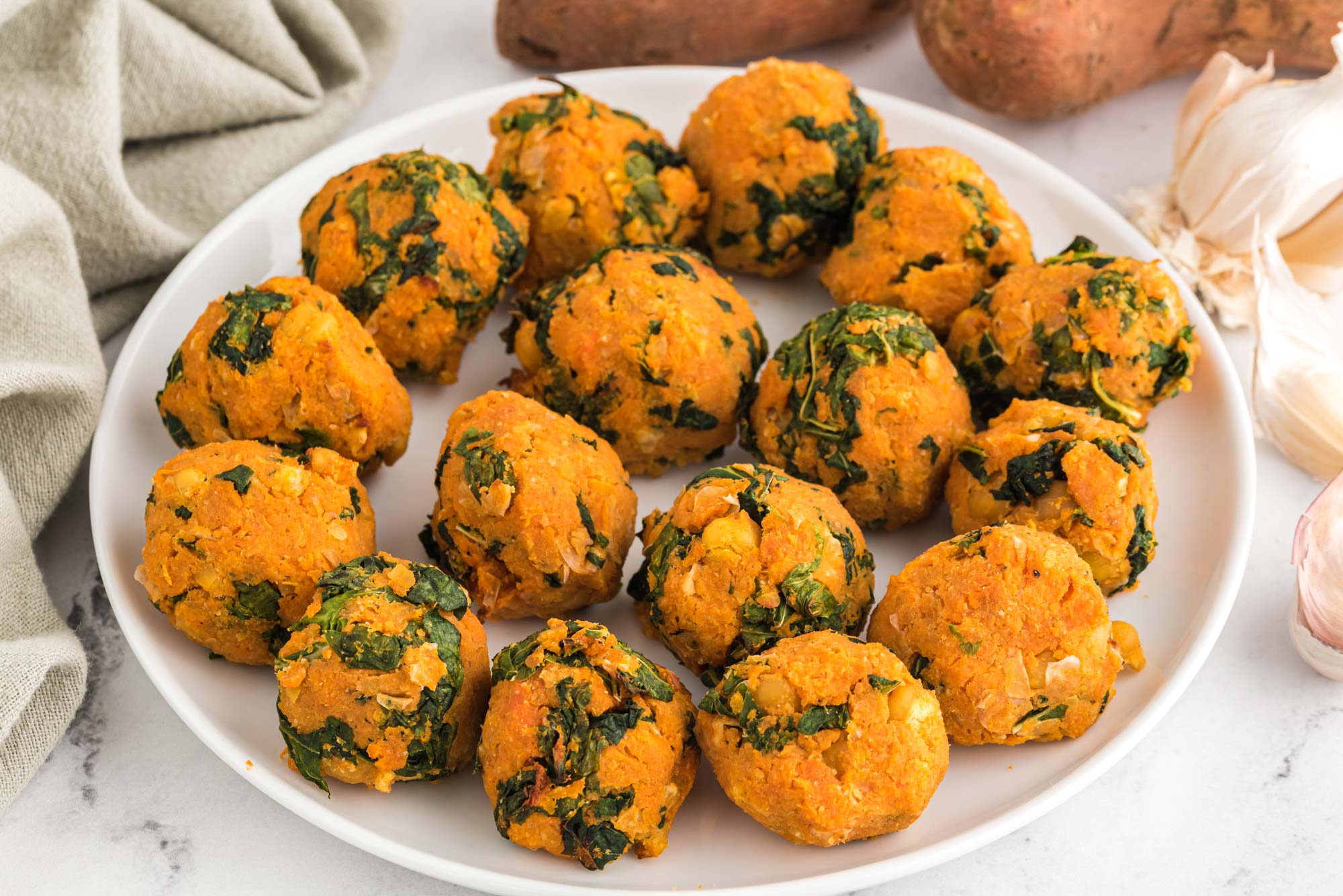

Not only are you omitting the oil that’s traditionally used to make snacks and apps crispy, but you’re also including nutrient-dense rock stars like sweet potato, kale, and chickpeas. These protein-packed, fiber-rich bites make a satisfying and sustainable snack, a crunchy, colorful appetizer for party guests, or a tasty, healthy treat for kids!
2. Crunchy Curried Chickpeas
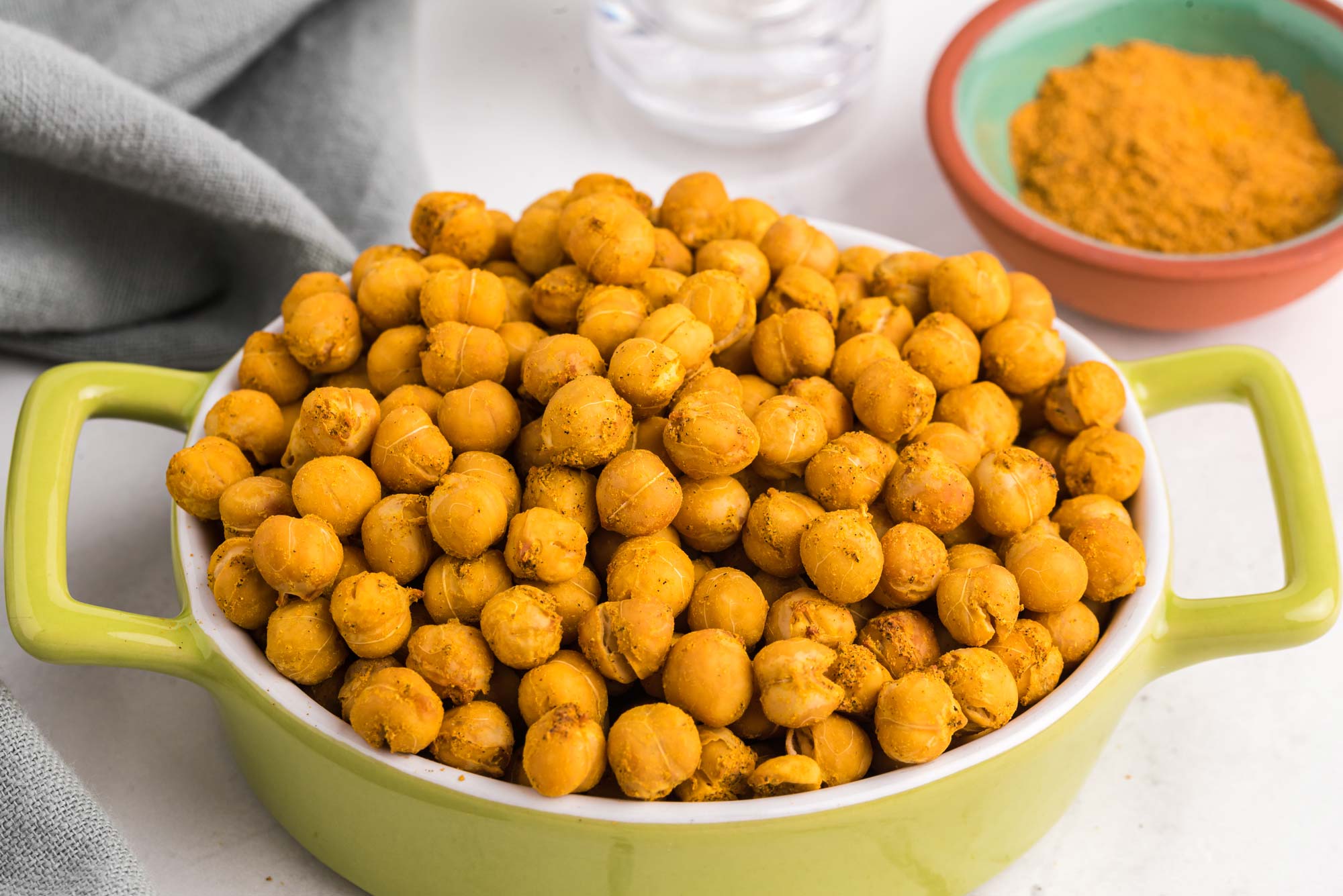
If you’re a crunchy snacker and you have an air fryer, then add this recipe to the top of your list. Crunchy chickpeas are all the rage and for good reason. They’re a great source of plant-powered protein, are packed with fiber, and can help keep you full in between meals. Plus, that crunch, especially when made in an air fryer, is irresistible! Add different seasonings throughout the week for variety, though we won’t be surprised if this Crunchy Curried Chickpeas recipe is your favorite!
3. Crispy Cajun Tofu Bites with Cajun Remoulade
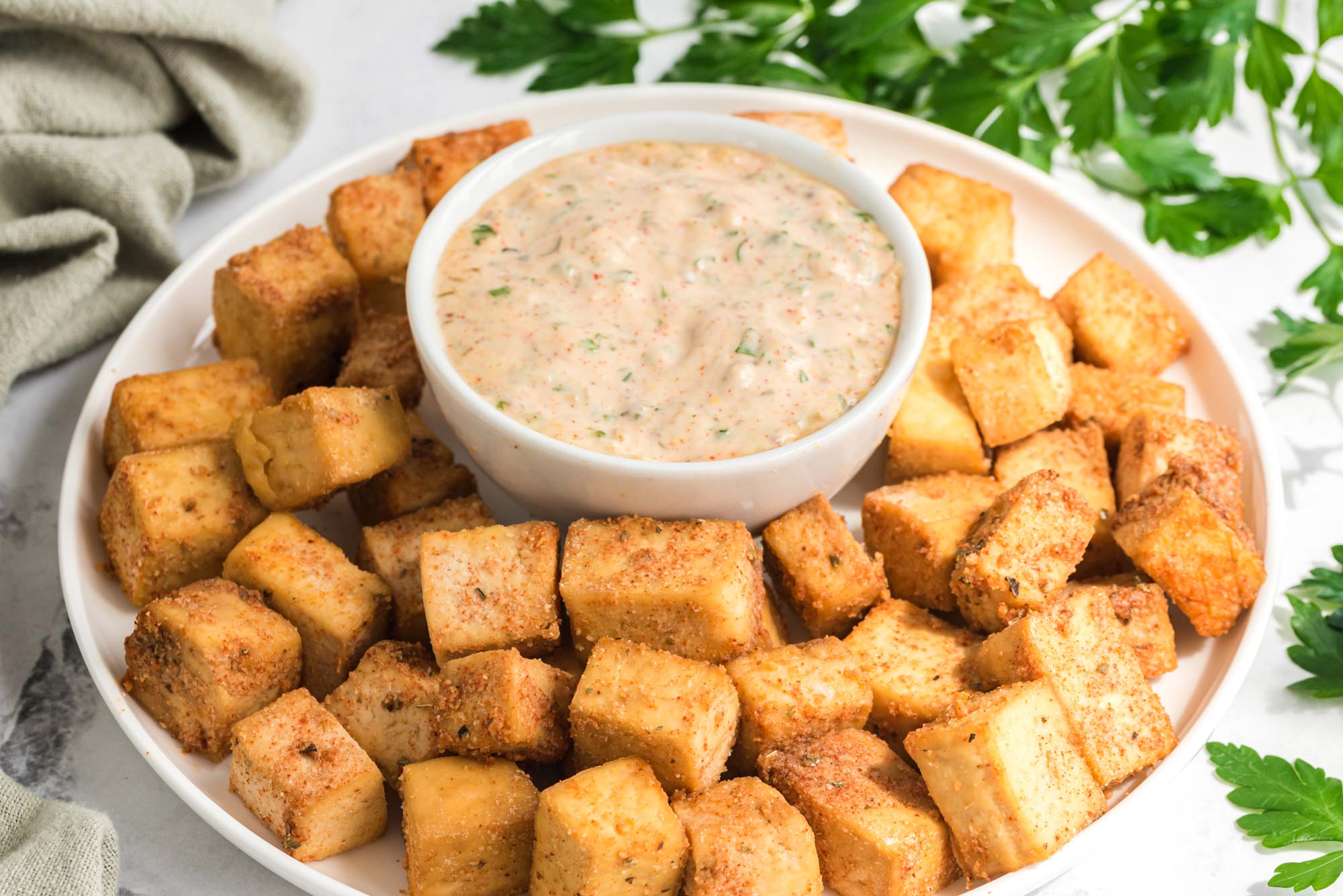
One challenge we sometimes hear about cooking tofu is that making it restaurant-style crispy can be difficult without deep frying it. Enter the air fryer! Tofu turns into crispy goodness, oil-free, with the help of this kitchen appliance. Snacking on crispy bites or adding them to salads, bowls, and stir-fries are just a few tasty and nutritious ways to enjoy nutrient-dense tofu. Try this air fryer recipe to spice up your next lunch or dinner!
4. Air Fryer Cauliflower Chickpea Tacos
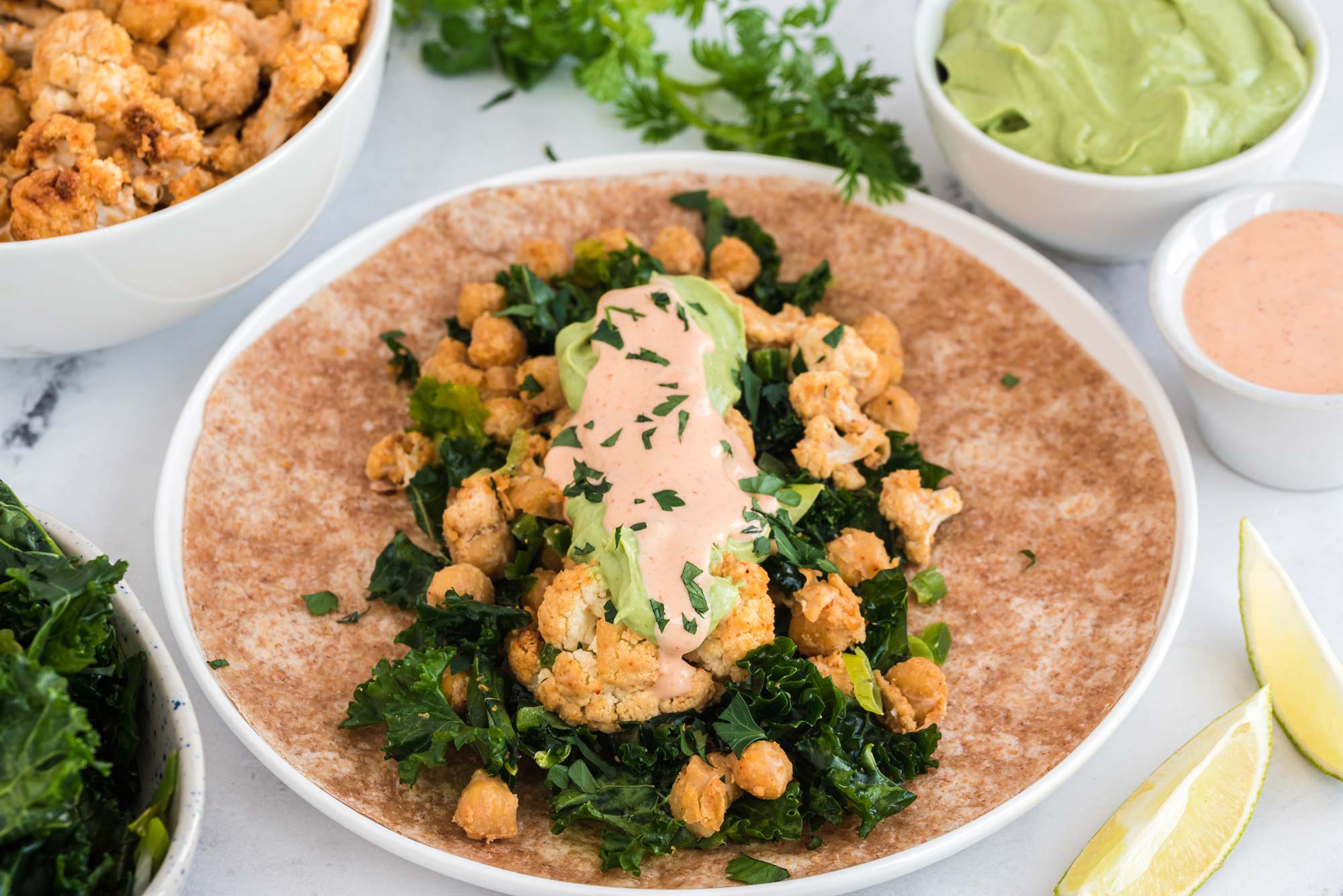
This is one of our favorite air fryer recipes! Cauliflower and chickpeas cook in a fraction of the time you would need in a traditional oven, and turn into crunchy deliciousness. Add them to your favorite whole-grain tortillas or lettuce wraps to create a scrumptious and hearty dinner that the whole family will love. We provided a couple of options for fun and creamy sauces to complement the crunch, but feel free to improvise by adding your favorite.
5. Chocolate Walnut Brownies for Two
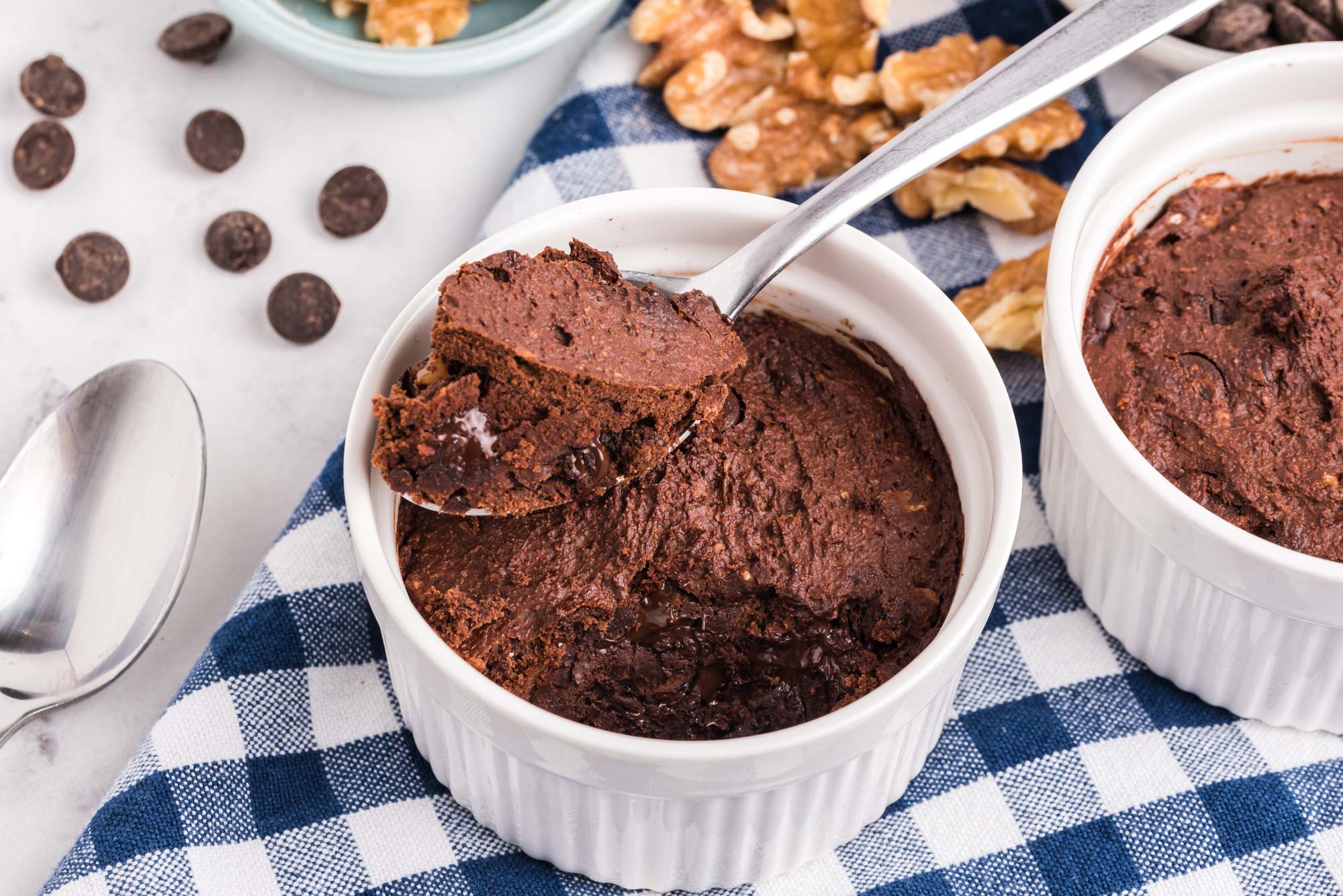
We’re here to tell you that air fryer brownies are a thing, and for good reason. The result is crispy perfection on the outside and a moist, dense texture on the inside. Yum! The only downside is that space prevents making a large batch of brownies. Thankfully, they only take 15 minutes to bake, meaning that, in just one hour, you can easily manifest several batches of brownie goodness!
Air Fryers Can Be a Creative Addition to Your Kitchen

Air fryers are a popular kitchen appliance that have taken the culinary world by storm since their introduction in the past decade. They can help people enjoy the mouthfeel and taste of fried foods without the oil, and are versatile enough to replace toasters, microwaves, ranges, and ovens, depending on the type of food and the way you like it.
But they are not an essential kitchen appliance. Humans can live very well without air fryers. So if you don’t have room on your counter, or don’t want to spend the money, don’t feel like you’re missing out.
They come with both pros and cons, including concerns about overdoing the frying and exposure to toxic chemicals. But if you get the right model and use healthy recipes like the ones in this article, an air fryer can be a lovely addition to your kitchen and lifestyle. Once you experience the joys of air frying, you may even be willing to donate your chocolate fondue fountain and hot dog cooker to the thrift store.
Tell us in the comments:
- Do you have an air fryer? If so, what’s your favorite thing to make?
- Are you thinking of getting an air fryer? What would you use it for?
- What’s one healthy food that you’d eat more of if you could “fry” it without oil?
Feature image: iStock.com/Thai Liang Lim
Read Next:
- Healthy Starters and Appetizers for All Occasions
- The Joys and Benefits of Slow Cooking: Plus 5 Easy & Nutritious Plant-based Slow Cooker Recipes
- 27 Useful Kitchen Tools (+3 Bonus Tools) to Make Cooking Easier
