
Summary
Up to 30% of people worldwide have low magnesium levels, with potentially dire health consequences. What can magnesium do for your heart, bones, sleep, and mood? What are the best food sources, and how can you absorb more from your diet? Should you supplement? If you do, how much, and what type? Here’s what the research says about magnesium health benefits and potential risks.
Are you near a AA battery? If so, pick it up and feel its weight. That’s roughly how much of the mineral magnesium you have in your body: about 25 grams, or a little less than an ounce. Magnesium plays a vital role in many bodily functions, yet it gets less attention than its more famous buddies, iron and calcium.
While magnesium abounds in nature, it’s the seventh most common element on Earth by weight; many people aren’t getting enough of it to achieve and maintain optimal health. Somewhere between 10% and 30% of people worldwide have low magnesium levels in their blood, and around 50% of Americans take in less than the recommended amount. Magnesium deficiency is so widespread that some cardiologists are calling it a public health crisis.
What exactly does magnesium do in your body? What are the health benefits of magnesium? And why are so many of us deficient these days? Read on to find out!
What Is Magnesium?
Magnesium is a mineral that supports many critical functions in your body. Notably, it helps maintain normal blood pressure and contributes to the structure of your bones. It helps move calcium and potassium in and out of your cells, which keeps your nerves firing, your muscles contracting, and your heartbeat steady. It’s a cofactor involved in over 300 enzyme systems that regulate biochemical reactions. It’s also essential for energy production and for making DNA and RNA.
About half of your body’s magnesium is stored in your bones, and most of the rest sits inside your muscles and other soft tissues. Less than 1% circulates in your blood, where your kidneys keep it within a narrow range by deciding how much to excrete and how much to retain. That’s why, if your kidneys are healthy, it’s nearly impossible to get too much magnesium from food.
Six Magnesium Health Benefits

Magnesium is essential for everyday physiological function. It’s also crucial for preventing numerous health conditions. Below are some of the best-researched magnesium health benefits.
1. Improved heart health
A 2017 meta-analysis of 11 studies published in Nutrition Journal found that people with higher magnesium levels in their blood were less likely to develop heart disease or high blood pressure. Specifically, for every 0.1 millimoles per liter increase in circulating magnesium, there was a 4% lower incidence of hypertension. Research is ongoing to determine the optimal serum levels of magnesium to protect your heart.
Other research shows that magnesium supplementation can lower high blood pressure, especially among people with insulin resistance, prediabetes, and other high-risk characteristics.
2. Reduced risk for osteoporosis
Magnesium and calcium work together to keep your bones strong and healthy, so it makes sense that getting enough of these minerals can help slow or prevent skeletal weakening that often happens with age.
A 2017 study published in the journal Nutrients examined associations between skeletal muscle mass, grip strength, bone density, and dietary magnesium among over 150,000 men and women ages 39–72. People with higher magnesium intakes had modestly higher bone density and grip strength than those with lower intakes, differences that were comparable in size to a year or more of age-related bone and muscle loss. Because the study only measured intake and outcomes at a single point in time, it can’t show that magnesium intake caused these differences or that it prevents osteoporosis or fractures. Still, it does suggest that getting enough magnesium may support musculoskeletal health as you age.
3. May help prevent type 2 diabetes
In addition to the link between magnesium and heart health, the 2017 meta-analysis mentioned above also found that higher circulating levels of magnesium were associated with a lower risk of developing type 2 diabetes, though, again, there still isn’t clarity about optimal blood levels. A 2016 meta-analysis looked at 25 studies that collectively gathered data on more than half a million people, more than 25,000 of whom had type 2 diabetes. The data showed that for every additional 100 milligrams per day of dietary magnesium, a person’s risk of developing the disease dropped by about 8 to 13 percent.
4. May improve sleep patterns and quality

Many people find magnesium supplements calming, and it’s often included in over-the-counter sleep aids. This could have substantial health benefits for the estimated 50% of older adults who have some degree of insomnia or difficulty sleeping at night, since poor sleep increases the risk of hypertension, type 2 diabetes, obesity, depression, heart attack, dementia, and stroke, as well as auto accidents and mental health challenges.
A 2021 systematic review and meta-analysis pooled 3 randomized trials of oral magnesium for insomnia in adults over 55. People taking magnesium fell asleep about 17 minutes faster than those on placebo and slept a bit longer (an average of 16 minutes, to be exact). These results aren’t exactly conclusive, due to limitations that would bore all but the keenest statisticians, but the authors of the review noted that magnesium is inexpensive and widely available, so even this preliminary evidence may support trying it if you’ve got insomnia.
People with restless leg syndrome may be interested to know that, in a 1998 study, a small group of older adults with insomnia received 300 milligrams (12.4 millimoles) of elemental magnesium supplementation daily for 4 to 6 weeks. Participants found that rates of restless leg syndrome decreased and overall sleep efficiency improved.
5. May reduce and prevent migraines
A heavily studied health effect of magnesium is its relationship to migraines. Many researchers believe that magnesium deficiency may trigger waves of altered cortical activity, clumping of blood platelets in the brain, constricted blood vessels, and release of certain neurotransmitters that can lead to migraines. How much magnesium helps? Research is inconsistent, perhaps because not everyone has the same needs. Some people who suffer from migraines find relief at doses well above the general upper limit for supplements of 350 milligrams a day, with studies showing meaningful benefit at 400 or even 1,000 milligrams per day. That said, because high doses can cause diarrhea or abdominal pain, this is something to do with a health care provider rather than on your own.
6. May help regulate mood
Getting enough magnesium may also help uplift your spirits. A 2017 study aimed to determine if over-the-counter magnesium chloride supplementation improved symptoms among 126 adults in outpatient primary care clinics with reported mild-to-moderate depression. In a randomized crossover design, participants were split into 2 groups: 1 group received 248 milligrams of magnesium per day for 6 weeks first, then a 6-week no-treatment control period; the other group did the reverse, starting with 6 weeks of no treatment before receiving 6 weeks of magnesium. This design let researchers compare each person’s own symptoms while on and off magnesium. Researchers found that magnesium supplementation significantly improved depression scores as measured by a questionnaire. And 61% of the participants said they would continue using magnesium in the future.
How Much Magnesium Do You Need?

So how much magnesium should you be aiming for? The Recommended Dietary Allowances (RDA) for daily magnesium are as follows:
- 0–6 months: 30 milligrams
- 7–12 months: 75 milligrams
- 1–3 years: 80 milligrams
- 4–8 years: 130 milligrams
- 9–13 years: 240 milligrams
- Boys 14–18 years: 410 milligrams
- Girls 14–18 years: 360 milligrams
- Men 19+ years: 400–420 milligrams
- Women 19+ years: 310–320 milligrams
- Pregnant teens: 400 milligrams
- Pregnant women: 350–360 milligrams
- Breastfeeding teens: 360 milligrams
- Breastfeeding women: 310–320 milligrams
Worth knowing: There’s no upper limit on magnesium from food. Your kidneys clear any excess, and dietary magnesium has never been shown to cause problems in healthy people. So you can’t overdo it with pumpkin seeds and spinach (which, as we’ll see, are abundant sources).
Supplements are different. The upper limit there is 350 milligrams a day for adults, and notice that it’s lower than the RDA for most adults. That isn’t a contradiction. It reflects that most of your magnesium should come from food, with supplements filling a gap rather than doing the whole job. That 350-milligram ceiling also reflects digestive tolerance, not toxicity. People who go past it are likely to get loose stools, which is uncomfortable rather than dangerous.
The exception is anyone with reduced kidney function. Because the kidneys clear magnesium, it can build up to harmful levels when they aren’t working well. If that’s you, talk to your health care provider before taking a magnesium supplement.
Magnesium Deficiency
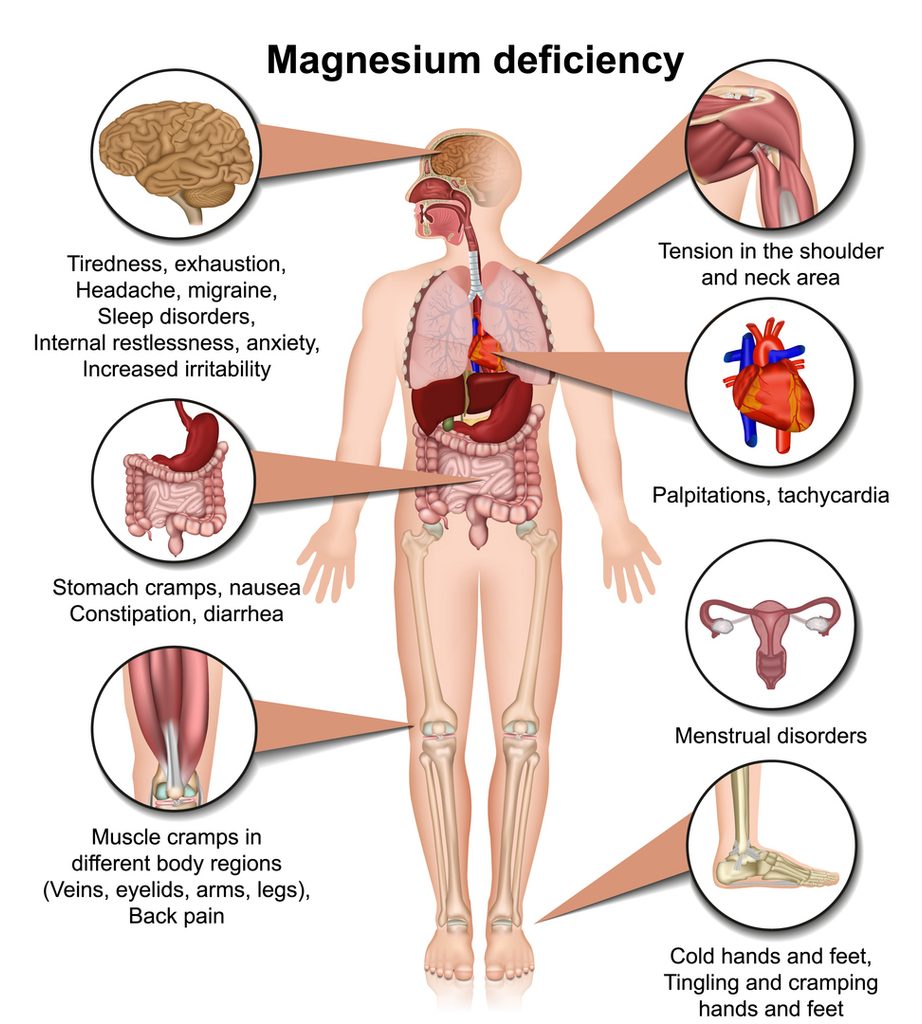
A 2018 review in Open Heart argues that subclinical magnesium deficiency is widespread and underappreciated as a contributor to chronic disease. The researchers conclude that it’s one of the leading causes of chronic disease, including cardiovascular disease and early mortality, around the globe. Subclinical magnesium deficiency indicates that your blood magnesium levels appear normal, but you still have an underlying mineral deficiency.
According to the USDA survey What We Eat in America, more than half of American adults don’t get enough magnesium from food alone. Adult men consume an average of 344 milligrams per day, and women average 270 milligrams, but roughly 55% of men and 51% of women fall short of their estimated daily requirements. The deficits are particularly steep among teenage girls (89% miss the mark) and men aged 71 and older (75% fall short). When diet alone leaves nutritional gaps, adding magnesium supplements can bring intake well above minimum thresholds.
A standard blood test considers normal magnesium levels to be between 0.75 and 0.95 millimoles per liter, with anything below 0.75 millimoles per liter signaling an official deficiency. However, standard tests look at serum magnesium (in the blood), not the magnesium inside your cells and bones, where almost all of it lives.
Blood levels are the last thing to drop. Because your body pulls magnesium from bone and tissue to keep them steady, a low reading usually means your total-body stores are already significantly depleted. That’s why a test can come back normal even when your stores are running low.
It’s a little like trying to figure out a bank’s financial health by counting the money in the armored vans going to and from the building. If you don’t see a normal amount, that probably indicates a real problem, but it’s far from the whole story.
What Causes Magnesium Deficiency?
In addition to inadequate consumption of magnesium from food, low magnesium levels in the body may be caused or worsened by:
- An excess of heavy metals, which may be due to soil contamination
- A lack of minerals due to soil erosion
- Having a digestive disorder, such as celiac disease or chronic diarrhea
- Having type 2 diabetes
- Being dependent upon alcohol
- Being an older adult, as magnesium absorption decreases with age
- Taking certain medicines, including diuretics and proton-pump inhibitors, that can cause magnesium loss
Symptoms of early magnesium deficiency can include constipation, fatigue, loss of appetite, and weakness, which can eventually lead to more severe complications. These may include muscle contractions, seizures, low blood levels of calcium and potassium, abnormal heart rhythm, personality changes, and numbness in the limbs. Over the long term, low magnesium levels have been associated with high blood pressure, type 2 diabetes, osteoporosis, and heart disease.
Magnesium Overdose & Interactions

Overdosing on magnesium is really only possible if you’re taking supplements that contain the mineral. If you’re getting all your magnesium from food and your kidneys are working normally, you’re unlikely to accumulate toxic levels of the mineral, because healthy kidneys filter out any excess. That margin depends on kidney function: The National Institutes of Health notes that the risk of magnesium toxicity rises with impaired renal function or kidney failure because the ability to remove excess magnesium is reduced or lost.
Large doses of magnesium from dietary supplements or medications can cause diarrhea, as well as nausea and abdominal cramping. Diarrhea from magnesium happens because unabsorbed salts in the intestine and colon draw in water and speed up intestinal movement. In other words, magnesium makes things move pretty quickly through your intestinal tract, which is one reason why magnesium is sometimes used to alleviate mild constipation. Magnesium carbonate, chloride, gluconate, and oxide are more likely to cause diarrhea.
Early signs of excessive magnesium intake can include low blood pressure, facial flushing, depression, urine retention, and fatigue. Eventually, if untreated, these symptoms can worsen and include muscle weakness, difficulty breathing, irregular heartbeat, and even, in very rare cases, cardiac arrest.
Extremely high doses can result in hypermagnesemia, or very high levels of magnesium in the bloodstream. Hypermagnesemia can become fatal, especially if your kidneys are not functioning optimally. Large doses of laxatives and antacids that contain magnesium may contribute to magnesium toxicity, typically when they provide over 5,000 milligrams of magnesium per day.
Lastly, magnesium supplements can interact with certain medications. For instance, bisphosphonates used to slow or prevent bone loss, antibiotics for bacterial infections, diuretics to promote water loss, or proton pump inhibitors often prescribed to manage acid reflux. Interactions may include excessive loss of magnesium, formation of insoluble complexes, and reduced efficacy of the medication.
Recommended Intake for Magnesium Supplements
How much magnesium is too much? There isn’t any known danger from eating too much magnesium from food. But there is a recommended upper intake level (UL), which clarifies the highest amount deemed safe to consume per day supplementally. Please note that this is in addition to your dietary magnesium.
- Birth to 12 months: None established
- 1–3 years: 65 milligrams
- 4–8 years: 110 milligrams
- 9–18 years, including pregnant or lactating women: 350 milligrams
- 19+ years, including pregnant or lactating women: 350 milligrams
Those limits refer to elemental magnesium, meaning the magnesium itself and not the compound it comes in. The difference can be large. Magnesium oxide is about 60% magnesium by weight, while magnesium glycinate is only about 14%. So a product whose front label says “500 milligrams magnesium glycinate” may be giving you just 70 milligrams of actual magnesium. To see what you’re really getting, check the Supplement Facts panel, which should list the elemental amount.
This also matters when you compare a product to the research. The sleep trials described above used 320 to 729 milligrams of elemental magnesium a day (1 trial delivered a whopping 500 milligrams via 828 milligrams of magnesium oxide), and some of the migraine studies used even more. Those doses exceed the 350-milligram upper limit, so if you’re considering that much, make the decision with your health care provider.
Magnesium-Rich Foods

Some of the best dietary sources of magnesium include:
- Nuts and seeds, especially almonds, cashews, and peanuts (technically a legume), including nut butters made from them
- Spinach (cooked spinach packs more per serving, simply because it shrinks)
- Beans and legumes, like black beans and edamame (soybeans)
- Dark chocolate, especially when you choose types that are at least 70% cacao or cocoa solids
- Avocado
- Potatoes
- Whole grains, especially quinoa and whole wheat flour
- Tempeh
- Bananas
Magnesium Absorption

The magnesium you eat isn’t all magnesium you get to use. Your body typically absorbs only 30% to 40% of the magnesium in your diet. That share can go down or up depending on what you eat it with, how you prepare your food, and a few other factors.
Start with what’s on your plate. Certain nutrients and compounds can interfere with magnesium absorption when they’re eaten in the same meal. One of these is phytic acid, a natural compound in many plant foods that can impair magnesium absorption (and it does the same with several other minerals, including calcium, zinc, and iron). Some nuts, seeds, legumes, and grains are high in phytic acid, and the levels are highly unpredictable. (Weird but true: 1 almond can contain as much as 20 times as much phytic acid as another.)
Here are some ways to get more magnesium out of what you eat:
- Steaming or sautéing vegetables instead of boiling them, or using the cooking liquid, since magnesium leaches into the water (and eating some vegetables raw to retain all their magnesium)
- Choosing sprouted, soaked, or fermented grains and legumes, which are lower in phytic acid
- Taking high-dose calcium supplements at least two hours apart from magnesium-rich meals or magnesium supplements, since the two minerals can compete for absorption
- Avoiding high-dose zinc supplements, which can interfere with magnesium absorption
- Getting enough vitamin D, which helps your gut absorb magnesium
- Not smoking, as smoking is associated with lower magnesium levels
Should You Take a Magnesium Supplement?

The best way to get magnesium, like most vitamins and minerals, is to eat foods rich in it. Dietary magnesium comes in a form your body can recognize and knows what to do with.
If you have symptoms of magnesium deficiency, your blood levels are low, or your diet consistently lacks magnesium-rich foods, you may want to consider supplementation. As we saw above, a normal blood test doesn’t rule out depleted stores, so a reassuring number isn’t a reason to stop paying attention. But keep in mind that supplementation increases the risk of magnesium overdose, so it’s important to know the appropriate supplement dosage and stay within a safe range. And if you take other medications or have reduced kidney function, you may want to talk with your health care provider about what’s right for you.
Magnesium Types
There are many types of magnesium supplements to choose from. The variety can be bewildering, so here’s a (hopefully helpful) summary, along with their application:
- Magnesium malate contains malic acid, which is found naturally in fruits and wine. It has a higher absorption rate, which may help treat magnesium deficiency. This form is sometimes used to treat chronic fatigue syndrome and fibromyalgia, although the jury is still out on its effectiveness.
- Magnesium glycinate contains the amino acid glycine, which works with brain neurotransmitters like GABA to promote calmness and improve sleep. It also has an anti-inflammatory effect, but doesn’t work as well for alleviating constipation.
- Magnesium taurate contains the amino acid taurine and may help regulate blood pressure and blood sugar levels. Its potential heart-health benefits have been observed primarily in animal studies. So more research on human applications is needed.
- Magnesium oxide is common (and is the form found in milk of magnesia). But this type of magnesium is more likely to cause diarrhea because higher doses are typically needed to have an impact. Furthermore, only about 4% of magnesium oxide is absorbed by the body.
- Magnesium citrate (magnesium bound with citric acid) can have a laxative effect, which may help with constipation. It’s also often recommended for migraine prevention.
- Magnesium gluconate is used to treat magnesium deficiency and showed the highest bioavailability among ten magnesium salts tested in animal research. (Our view on the use of animals in medical research is here.)
- Magnesium chloride is a magnesium salt combined with chlorine. It’s well-absorbed and often prescribed for heartburn, magnesium deficiency, and constipation.
- Magnesium lactate is a magnesium salt combined with lactic acid. It’s mostly used to fortify foods and drinks, and less commonly as an over-the-counter supplement than other forms of magnesium. It’s reported to be gentler on the intestinal tract than some other forms, which can help people who need large doses.
- Magnesium threonate is best known for increasing magnesium concentration in the brain, as most published research relates to improving memory and cognition. Animal studies suggest it may help protect against age-related cognitive decline, though human research remains limited. This form tends to be significantly more expensive than others, in part because it’s patent-protected.
Magnesium-Rich Recipes

Whether you supplement or not, you’ll still benefit by eating a magnesium-rich diet. You can boost your intake throughout the day by adding magnesium-rich ingredients to your everyday cooking.
The Blueberry Walnut Pancakes, Citrus Salad in a Jar, and Warmly Spiced Quinoa Chickpea Stew are just a few examples of nourishing recipes that include magnesium-rich ingredients such as walnuts, oats, spinach, cashews, lentils, quinoa, chickpeas, and avocado (plus more!). To ensure you’re getting enough magnesium every day, consider adding extra magnesium-rich ingredients to a meal. Examples include sprinkling nuts or seeds on a grain bowl, slicing avocado into a sandwich, and tossing spinach into a stir-fry.
1. Blueberry Walnut Pancakes

Walnuts, bananas, oats, and plant-based milk not only make these simple-to-create pancakes delicious, but they also provide a decent dose of magnesium to start the day. Add blueberries, or your favorite fruit, for extra natural sweetness and even more plant-based nutrition.
2. Citrus Salad in a Jar

This salad checks all the boxes: crunch from the cashews, creaminess from the avocado, sweet and savory from the dressing, and magnesium from just about every ingredient, including spinach, cashews, lentils, avocado, and sunflower seeds. Prepare the salad the night before work in a mason jar for a delicious, healing, plant-powered lunch. Or add all the ingredients directly to your favorite salad bowl for a tasty, impromptu, nourishing meal.
3. Warmly Spiced Quinoa Chickpea Stew

Warmly Spiced Quinoa Chickpea Stew
This dish is a cross between a casserole and a stew. It is cooked stove-top like a stew, but is much more like a casserole in texture. The quinoa and chickpeas simmer with warm, earthy spices, balanced by the sweetness of dried figs and sautéed fennel.
Magnesium Is Essential for Your Health

Magnesium is an essential mineral, necessary for many bodily systems to function properly. Most people don’t get enough of it, which contributes to a host of problems impacting heart, bone, sleep, and mental health. You can boost your levels by regularly eating magnesium-rich foods, optimizing absorption, and, if needed, taking an appropriately dosed supplement.
Editor’s Note:
If you’re looking to support your magnesium intake, COMPLEMENT Magnesium is a thoughtfully formulated option. Each serving provides 200 milligrams of elemental magnesium, a sensible amount that helps fill dietary gaps while staying below the 350 milligrams supplemental upper limit. Most of that comes from bisglycinate and malate, two gentle, well-tolerated forms of magnesium. Every batch is third-party tested for potency and purity, including screening for heavy metals and contaminants, and it comes in a compostable pouch.
If you make a purchase through that link, COMPLEMENT will contribute a portion of the proceeds to support Food Revolution Network’s mission. (Thank you!)Tell us in the comments:
What are some of your favorite magnesium-rich foods?
Have you ever used magnesium supplements to improve sleep or relaxation? Did you experience a difference?
Feature image: iStock.com/samael334
